October 5, 2023 - Ross Video Team, News Broadcast
Why journalists need to embrace augmented news programming

Unlocking Engagement: Why journalists need to embrace augmented news programming
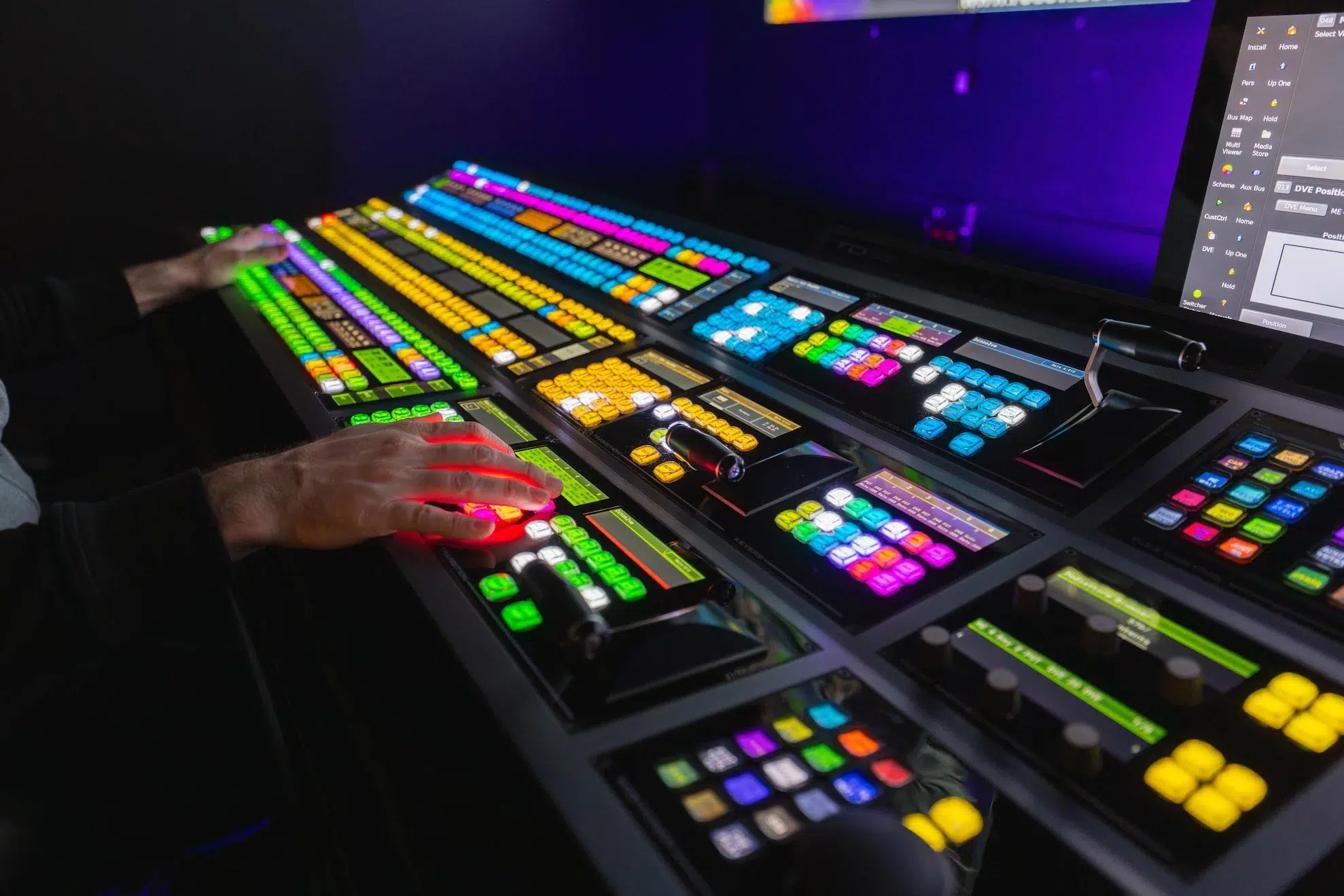
In a dimly-lit control room, the countdown to live begins. LEDs blink, switchboards hum, and news anchors straighten in their seats. It’s a familiar routine – predictable and automatic.
News programming is, by now, a well-oiled machine. But in 2023, audiences expect more. They’re inundated with choices. Viewers not only have endless channels to choose between, but also multiple platforms. Journalists must convince viewers to interact with their stories in a way that captures their interest above and beyond the competition – and that competition is not only between broadcasters, but also against ever-decreasing attention spans.
More Than Just Words
Supplementing news shows with elements such as Augmented Reality (AR), Virtual Reality (VR) and even Extended Reality (XR) graphics could be the answer. More visually engaging content is key to audience understanding. Simply delivering information is not enough – audiences require real-time visualisation and analysis, too.
Consider the impact of election night news programming. The real-time map graphics, charts, and even 3D sets putting journalists in new locations all ensure that audiences understand the impact of every breaking announcement.
According to a study from 3M Corporation, humans process images 60,000 times faster than they can process text. As much as 90% of all information transmitted to the brain is visual. It’s no wonder that audiences respond so positively to newsroom graphics – we’re a species of visual learners.
But, delivering these immersive experiences successfully and at pace can be challenging. To incorporate these news technologies and remain competitive, journalists and producers need to explore and adopt new workflow solutions for modern control rooms that help AR, VR, and XR to be built into the process.
Engaging On Every Channel
Promoting active engagement is important not just during the news broadcast itself, but also on other platforms. Statista research found that younger audiences are habitually consuming their news on social media – 50% of US respondents reported using it as a news source on a daily basis.
For broadcasters, this multichannel dilemma means that they need tools and workflows adaptable enough to use across multiple platforms. Implementing graphics is therefore a key element of any modern broadcasting strategy; graphics are versatile and adaptable, and with the right, story-centric workflow, they’re easily repurposed across multiple platforms.
That’s even more relevant in today’s news landscape, where even loyal audiences are hugely dispersed.
It’s vital to equip journalists with a flexible pipeline, allowing broadcasters to reuse elements and make content engaging – no matter where it appears.

The Ross Workflow Solution
Journalists may understandably be concerned at how quickly their ways of working are having to evolve.
And they’re not alone. Technical and production teams are having to consider the potential extra strain on their teams that such evolution could bring – teams that are still recovering from the huge changes in staffing and budgets resulting from the pandemic.
Thankfully, the right partner can provide new capabilities without introducing new pressures. Story-centric workflows and tools with intuitive interfaces are just the start.
In our recent guide to newsroom workflows, we outlined the three key phases of workflow evolution – confident storytelling, clean shows, and rapid iteration. The right workflows make it possible.
This new approach workflows helps to support control rooms in the 24/7, post-Covid era. So, the next time that ‘Live’ countdown begins, you’ll know your journalists are confident they have the tools they need to deliver an engaging story to audiences – no matter where they are.

This article explores what pressures are live production teams feeling right now and how do they expect those pressures to show up in their workflows over the next few years.

This article explores how do people expect to get from today’s SDI-centric facilities to a more IP- and cloud-enabled, hybrid future?
This article explores where are teams already using AI, what do they hope it will unlock, what worries them about it, and how does sustainability fit into the way they’re planning the next decade?