Few venues in hockey can match the energy of Montreal’s Bell Centre.
Home to the Montreal Canadiens and host to some of the industry’s biggest live events, the arena is known for creating unforgettable experiences for fans. Whether it’s a packed house for a playoff game or a sold-out concert, Bell Centre has built its reputation on delivering moments that resonate long after the event ends.
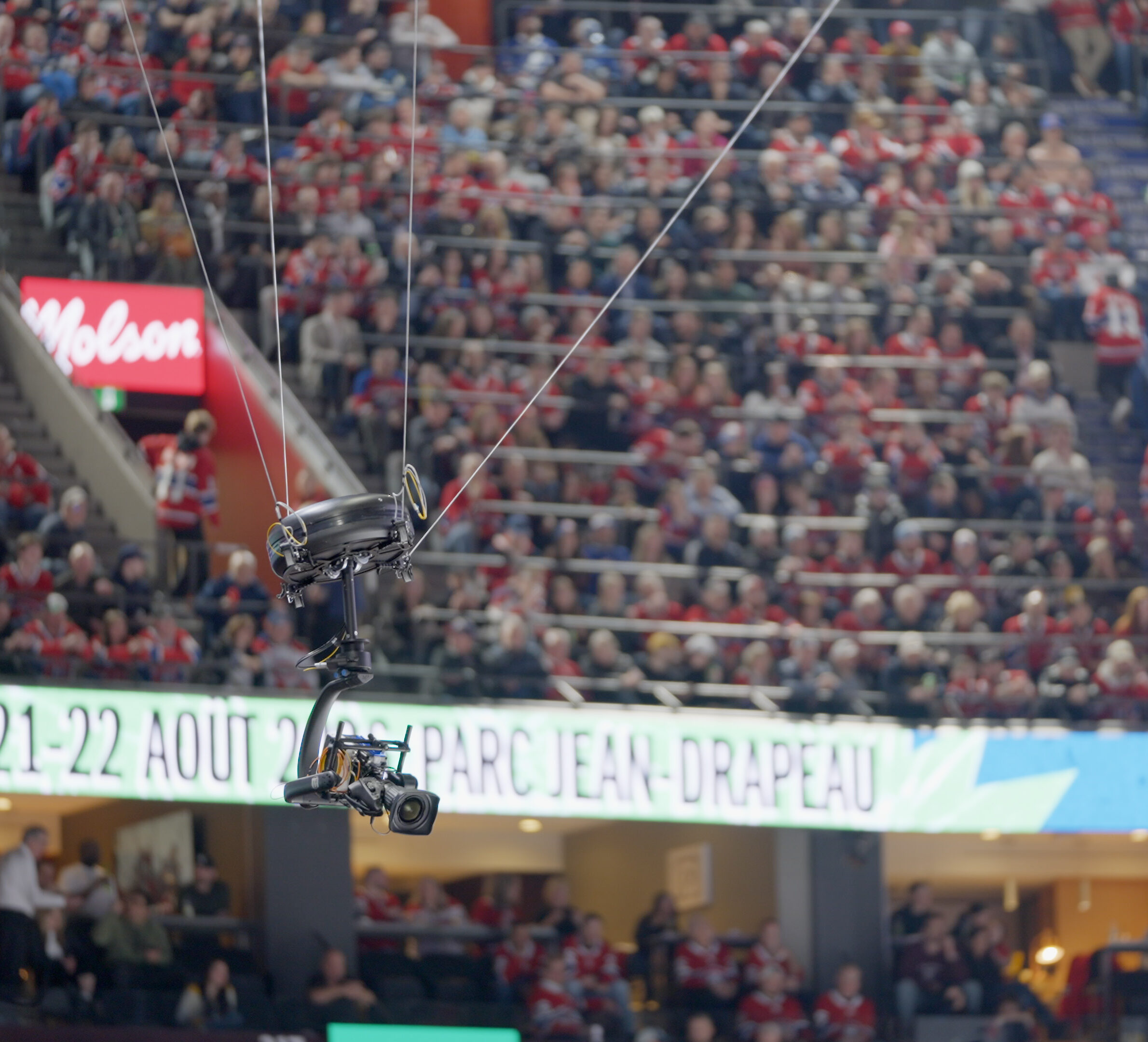
Now, with Ross Video’s spidercam cable camera system, Bell Centre is bringing audiences even closer to the action.
Purpose-built for stadiums, concert venues, studios, and live video productions of all sizes, iSeries delivers the dynamic movement and immersive perspectives that help audiences feel part of the moment.
For Boromy Ung, General Manager, spidercam at Ross Video, the project has been especially meaningful. As both a hockey fan and a longtime leader in fan engagement technology, he has had a front-row seat to the collaboration that brought iSeries to one of the NHL’s most iconic venues.
The right partner for a new perspective
The opportunity to bring iSeries to Bell Centre came together naturally.
As a longtime Ross customer, Bell Centre was already familiar with Ross Video and aware of the company’s expanding camera motion systems portfolio. When Ross added new cable camera capabilities to its portfolio, conversations quickly began about what might be possible inside one of hockey’s most recognizable venues.
That existing relationship proved invaluable. Bell Centre trusted Ross, Ross trusted Bell Centre, and both organizations shared a collaborative approach to solving challenges. Combined with Ross Video’s proximity to Montreal, it created the ideal foundation for bringing iSeries to one of hockey’s most iconic venues. For both organizations, the project represented an opportunity to work together on something new while building on years of trust and collaboration.

Bringing fans closer to the action
For Bell Centre, the objective wasn’t simply to add another camera angle. The goal was to capture the energy of the venue in a way that traditional camera positions couldn’t.
Anyone who has attended a Canadiens game understands the atmosphere inside the building. The challenge was finding a way to bring that same feeling to audiences watching from home.
As a dynamic cable camera system, iSeries delivers perspectives that traditional camera positions simply can’t. Sweeping, dynamic movements, and immersive aerial views help capture not only the action on the ice, but also the emotion surrounding it—from fan reactions to the intensity of key moments and the atmosphere that makes Bell Centre one of the most exciting arenas in hockey.
The impact extends beyond television audiences.
Whether fans are watching from home or following the action inside the arena, the additional perspectives help create a connection to the moment.
Built for the Reality of a Multi-Purpose Venue
Bell Centre isn’t just home to hockey.
Throughout the year, the venue regularly transitions between NHL games, concerts, and major live events. That operational reality became one of the most important considerations during planning.
While the initial installation can be completed during the off-season, restoring the system after a concert requires speed, efficiency, and careful planning. Every aspect of the deployment was designed to support fast turnaround times while maintaining the same operational standards expected for every event.
The challenge isn’t simply installing the system—it’s ensuring it can be deployed, removed, and returned to consistent and safe operation quickly enough to support the demanding schedule of a modern entertainment venue.
According to Ung, the initial installation can typically be completed in about a week, while returning the system to operation after an event is designed to take no more than half a day, helping Bell Centre maintain the flexibility needed to support its busy calendar.

What fans don’t see
The spectacular shots captured during a game are only one part of the story.
Behind every broadcast is a rigorous process designed to ensure safe and reliable operation.
Ung often compares operating a cable camera system to flying an airplane.
Just as a pilot doesn’t skip pre-flight procedures because yesterday’s flight was uneventful, iSeries operators follow a detailed checklist before every production. Visual inspections, software verification, communications checks, and system diagnostics are all completed before the camera ever leaves the ground.
The process is repeated before every event, regardless of how successful the previous production may have been.
Operators inspect cables, verify communications with the winches, review system status information, and confirm everything is functioning as expected before the system is cleared for operation.
Engineering the Experience
Operational procedures are only one part of the equation.
Long before a system is installed or a checklist is completed, safety is built into the engineering process itself.
Installing a cable camera system inside one of Canada’s busiest arenas required extensive coordination between engineering, operations, and venue teams. From site surveys and rigging considerations to flight path design and event-day procedures, every aspect of the deployment was carefully evaluated to ensure the system could deliver dynamic new perspectives while meeting Bell Centre’s operational requirements.
spidercam systems are engineered and manufactured to meet recognized international safety standards, including EN 17206, the European standard for machinery and equipment used in the entertainment industry. Combined with comprehensive site surveys, defined operating zones, geofencing capabilities, preventative maintenance programs, and rigorous pre-event inspections, these standards help ensure safety remains at the forefront of every deployment.
Together, these engineering safeguards and operational procedures allow production teams to focus on delivering the dynamic shots viewers see on screen while maintaining the high standards expected in live production environments.
When innovation becomes part of the production
One of the most rewarding moments for Ung came when broadcasters stopped treating iSeries as something new.
Instead, it simply became part of the show.
As the Canadiens’ playoff run gained momentum, broadcasters increasingly relied on iSeries perspectives for opening sequences, replay packages, and unique storytelling moments throughout the game.
One example stood out in particular. A local broadcaster began using a dedicated iSeries shot to open its pre-game coverage, capturing a perspective that simply wasn’t possible before.
For Ung, that growing adoption was validation that the project was accomplishing exactly what it set out to do.
The system had evolved from an exciting new capability into an expected part of the production workflow.
That’s when you know a technology is making an impact—not when people notice it’s new, but when they can’t imagine the production without it.

Looking ahead
While cable camera systems have become a familiar sight in major football and soccer venues around the world, Ung believes their role inside arenas is only beginning.
As adoption continues to grow, future possibilities could include deeper integration with tracking technologies, augmented reality workflows, and AI-powered production tools that help broadcasters tell richer stories and create more engaging experiences.
Ultimately, the goal remains the same: helping broadcasters create more compelling productions and bringing fans closer to the moments that matter most.
A rewarding journey
When asked to describe the Bell Centre project in a single word, Ung didn’t hesitate.
Rewarding.
For a lifelong hockey fan with a passion for innovation and broadcast technology, seeing iSeries become part of the Bell Centre experience carried special significance.
From trusted partnerships and operational excellence to innovative storytelling and fan engagement, the Bell Centre deployment represents more than a successful installation.
It’s a new view of one of hockey’s most iconic venues—and a glimpse into how the fan experience continues to evolve.