Vision 2035
Explore what’s ahead for live production through expert opinion. Leaders across news, sports, entertainment, and live events, all sharing their vision for what production will look like in the next decade.
Introduction
We talk a lot about change in this industry; new formats, workflows, delivery models, and technologies. But the next decade of live production won’t be defined by a single replacement technology. It will be shaped by a new capability layer that changes how systems are built and how teams interact with them.
Historically, the biggest leaps in live production have come from advances in computing. CPUs made software-defined systems possible. GPUs unlocked real-time graphics and video processing. And FPGAs brought deterministic signal processing into live workflows. Each one expanded what was possible in live production.
AI represents the next step in that progression, enabling new forms of automation, new ways to process video and audio, and more natural, conversational ways for people to work with complex systems.
Based on industry survey data and expert perspectives, this report explores where workflows are moving, how hybrid architectures are taking shape, and where teams are choosing to invest next.
On this page
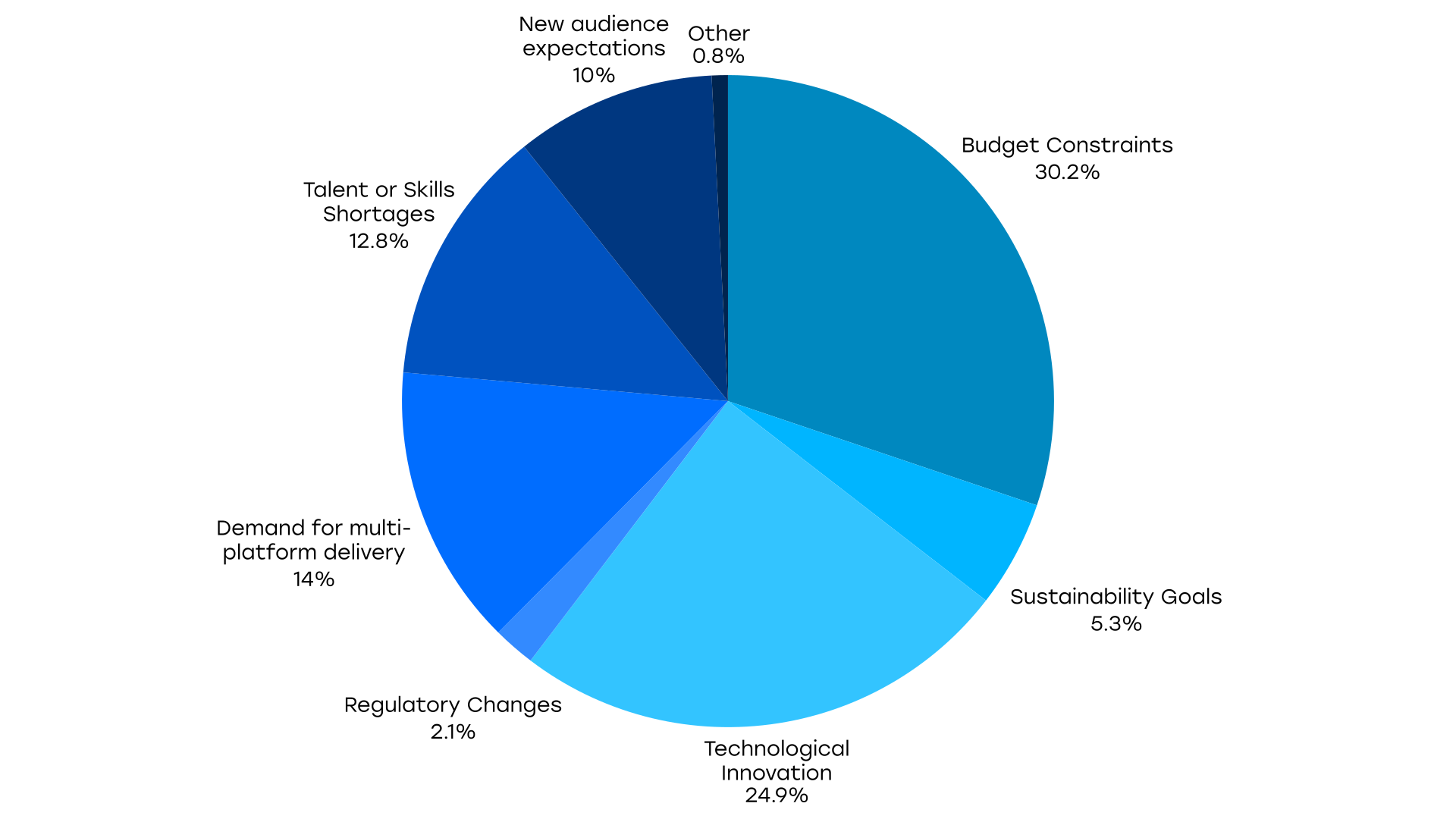
1. What is currently driving the most change in your production environment?
Change in the live production industry is being pushed from two sides: economics and audience reality. Budget constraints and new technology are driving the most change, while multiplatform delivery and audience expectations are applying pressure to adapt daily workflows.
A lot of barriers to producing content have vanished. In the past, broadcasters had the advantage of scale, but live production has been democratized to some extent. That’s a big driving force.
Those themes are reflected throughout this report, with the driver of change predominantly being: make more, for more people, in more places.
The other big driver of change is technological innovation, namely, AI. Historically, big leaps in live production have come from new types of computing capabilities, and AI appears to be the next step. We’ll drill down into the responses on AI in section 4 of this report.
2. Which technology will have the most significant impact on your live productions in the next five years?
Near term, respondents believe those drivers will materialize in their workflows as AI-powered automation and decentralized production teams, enabled by hybrid-cloud production platforms with improved latency and connectivity.
This mix reflects the pragmatic play demanded by budget constraints: move to cloud compute where it enables elasticity and reach, and add assistive AI to multiply output per operator.
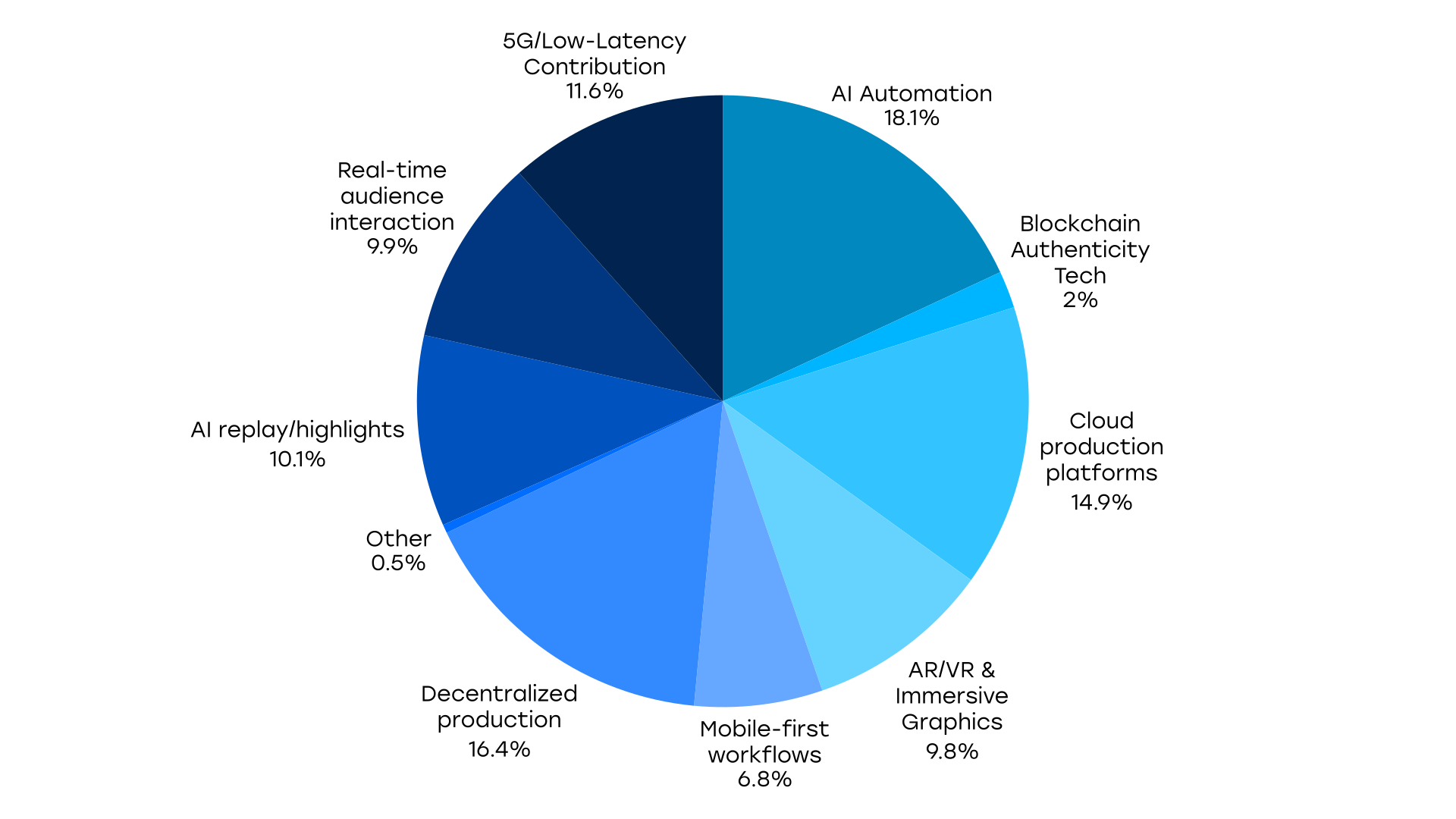
Our experts broadly agree that the pressure to do more with the same resources will drive us towards more assistive automation and distributed productions enabled by cloud-native tools, better connectivity, and orchestration that doesn’t turn every show into a science project.
3. What will be the most significant change in live production over the next ten years?
Looking further out, our survey respondents chose “IP overtakes SDI” as the decade’s defining change, followed by “AI as a production assistant” and a “transition to more distributed teams using software-defined tools.”
Respondents charted a path where the plumbing of live production will evolve to enable more software-defined production tools and AI assistive-automation, which is consistent with the responses on AI that we expand on later.
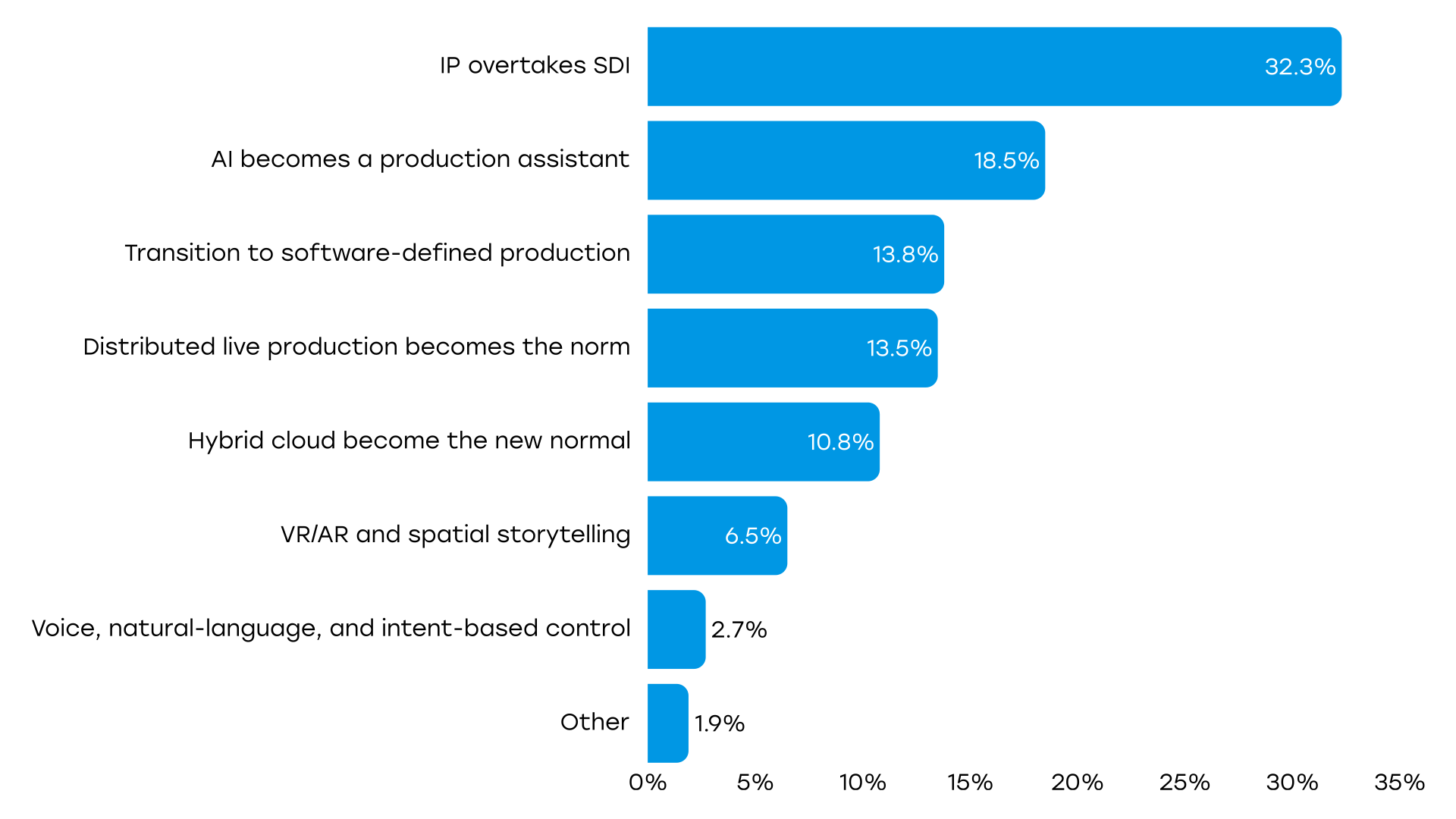
The more distant the future, the more the operating model shifts from fixed frames to broadcast-as-a-service, with tools built to scale up and down quickly and deploy anywhere. But the transition looks uneven, with SDI remaining where reach, cost of infrastructure, and risk limit the practicality of IP and cloud tools.
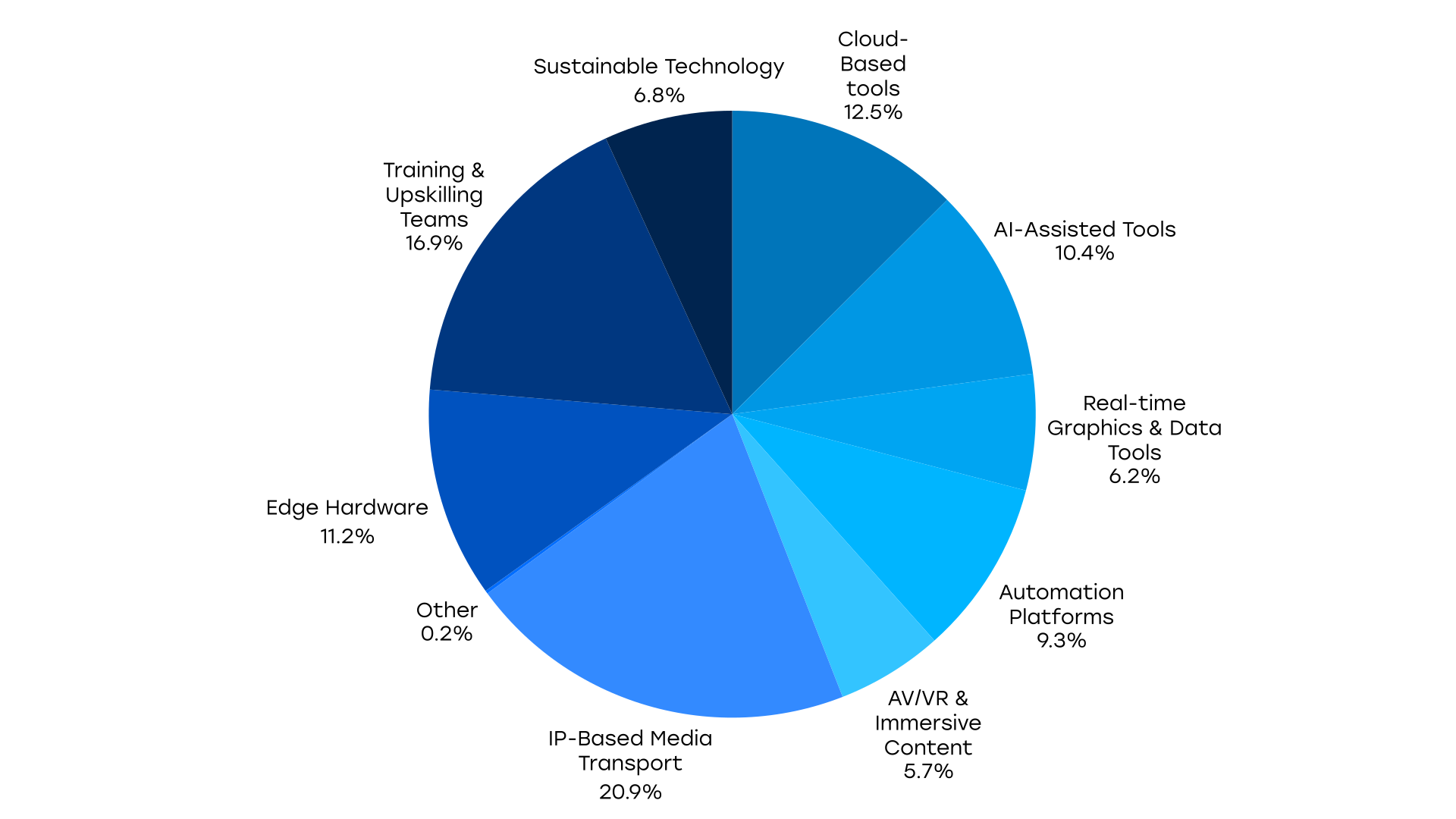
4. Which technologies are priority investments over the next five years?
Producers are under no illusions, with budgets favoring the plumbing and the people that use it. IP-based media transport was the biggest investment priority for our respondents, followed closely by training and upskilling.
Efficiency levers like remote or decentralized production, AI-assisted tools, and orchestration automation also tie directly to the change drivers we saw earlier. Storytelling enablers like graphics, data visualization, and Augmented or Virtual Reality are more targeted investments.
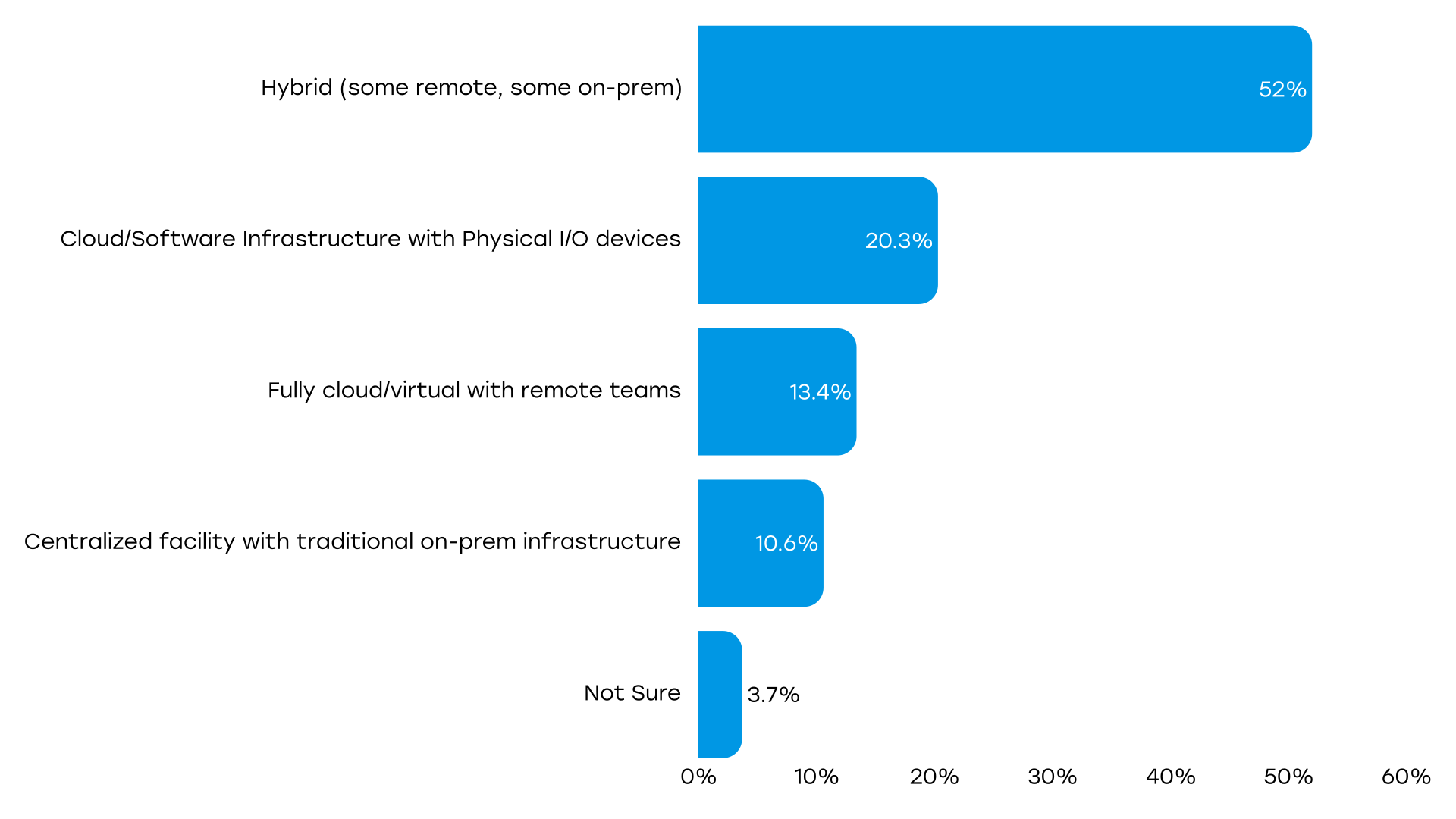
5. Where do you expect the majority of live production workflows to happen by 2035?
As we dive deeper into the workflows themselves, our respondents believe that the live production backbone of the future is cloud-enabled, with only 13% or respondents agreeing that the majority of workflows will live in a centralized facility with traditional infrastructure. That said, it’s clear that a large portion of workflows are expected to stay on-prem.
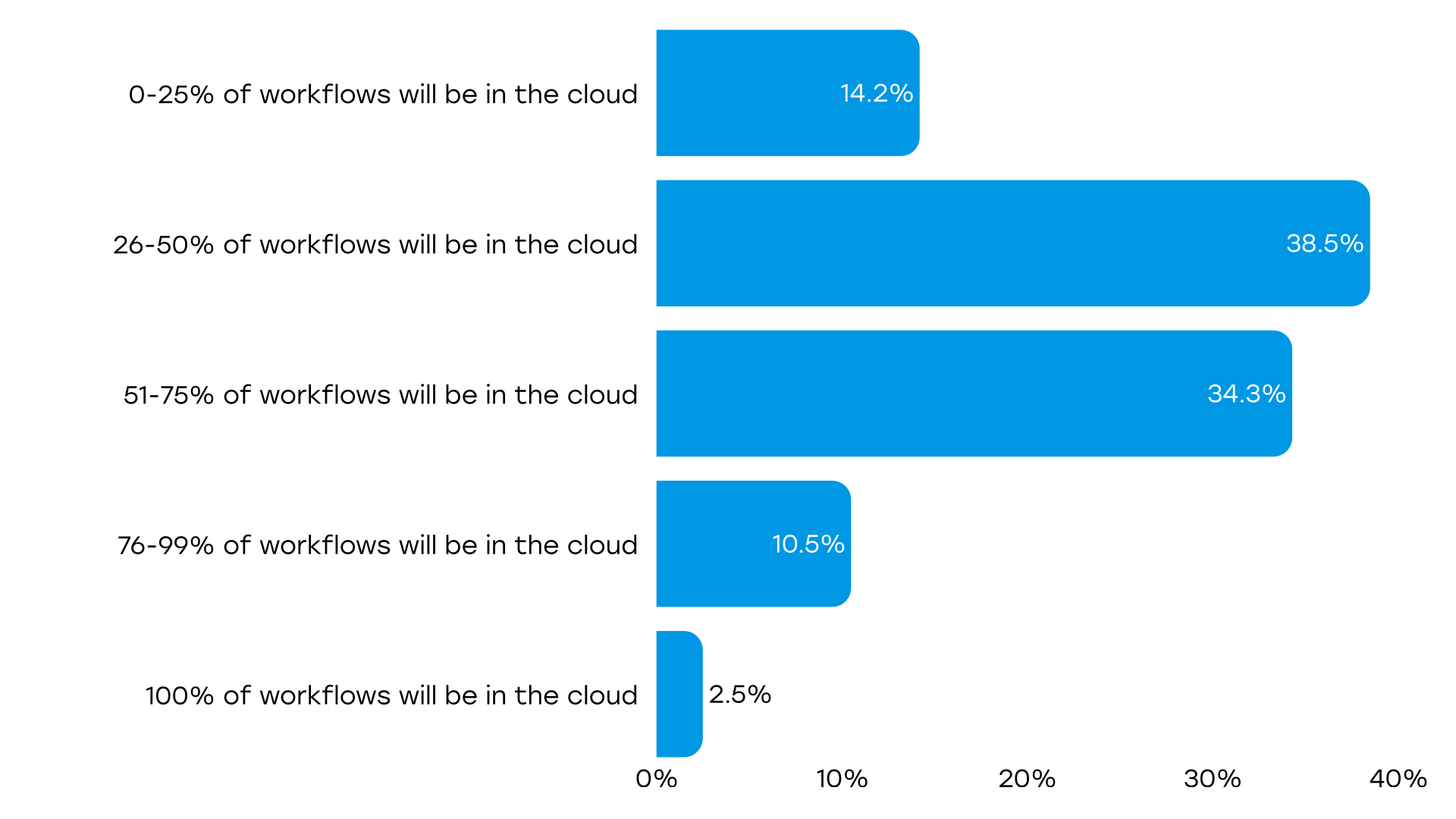
6. By 2035, what percentage of live production workflows do you expect to be cloud-based?
Participants forecast a substantial but not total shift to cloud-based production, aligning with the hybrid end-state theme. Around half believe that the majority of workflows will be cloud based.
This is consistent with the growing desire for burst capability and portability, but we can expect edge hardware to persist wherever timing, bandwidth, or human performance are decisive factors.
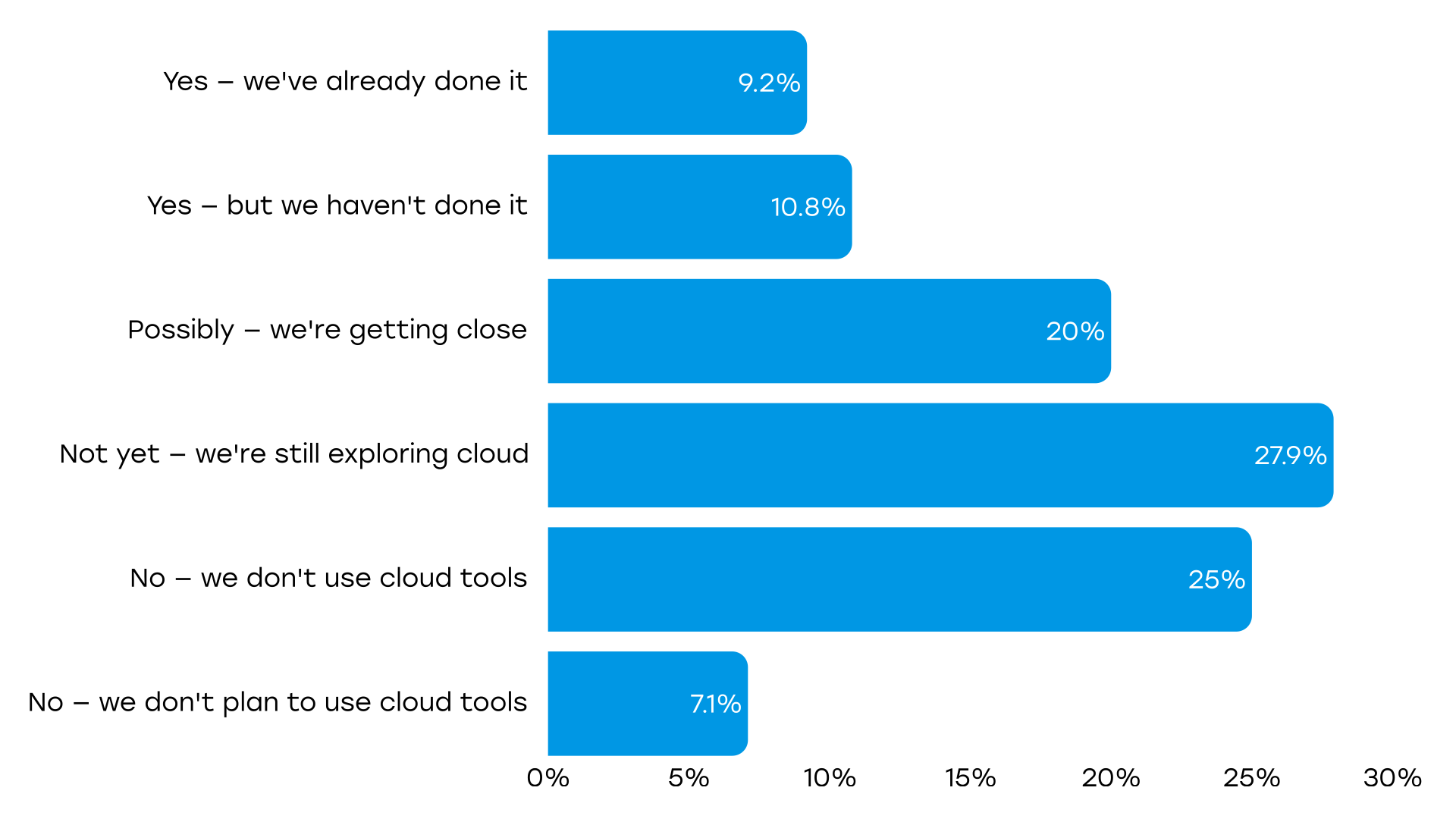
7. Do you believe your facility could successfully run a major live event entirely in the cloud today?
Despite that substantial shift, we are not quite ready to bridge the gap to cloud. Less than a quarter of respondents believe they could run a totally virtual production today. There’s still caution about virtualizing critical infrastructure, particularly from top-tier properties.
Many organizations will keep their primetime productions hybrid until cloud resilience is proven. But we expect most to continue integrating more cloud-native tools to allow them to burst production capability or make auxiliary productions more cost-effective.
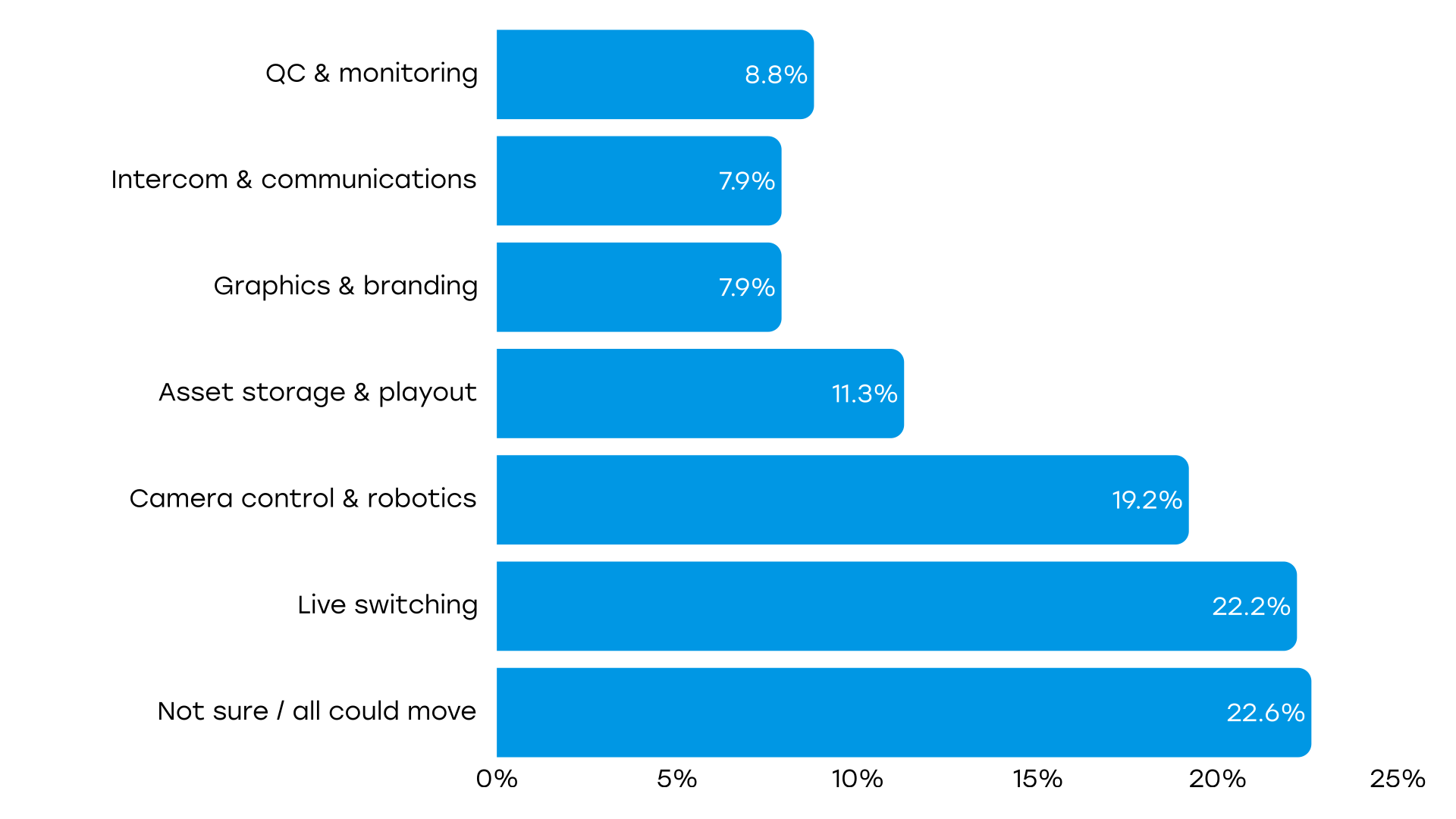
8. Which part of your production infrastructure is least likely to move to the cloud?
The “edge stays physical” signal is explicit. But we expect the lines between on-prem and cloud to blur, with operators adapting workflows to each show’s demands.
Performance-critical and latency-sensitive productions are likely to lean on local hardware and talent, while more basic infrastructure and content services are likely to become increasingly virtualized.
That aligns with expectations of a consolidation of roles and a more distributed workforce. You can centralize brains and enable more distributed talent, but you still have to respect the live moment. Beyond anything trivial, humans using some sort of control surface will still be critical to high-stakes broadcasting.
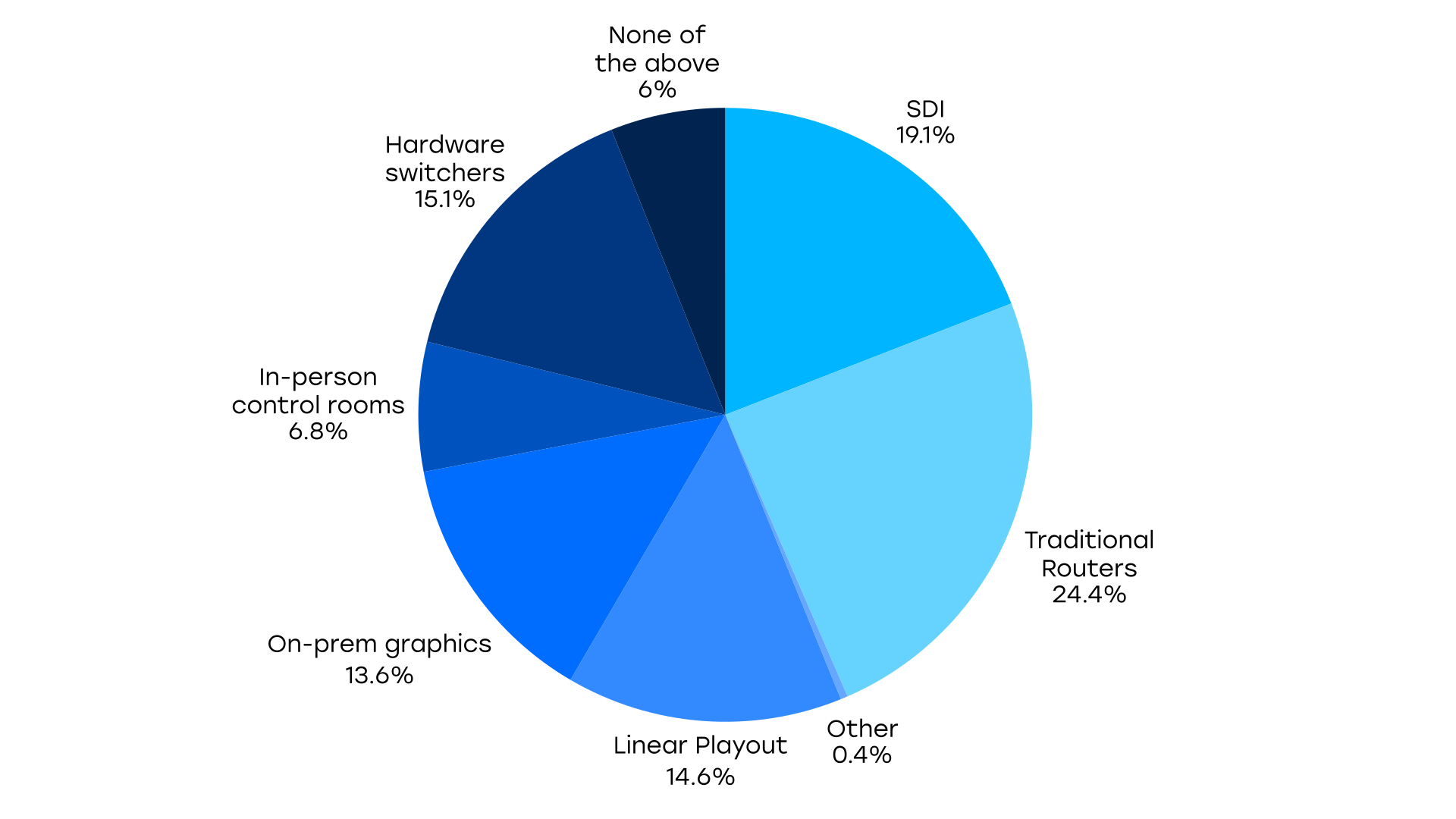
9. Which current broadcast workflows or tools do you expect will be obsolete by 2035?
Respondents expect pressure on traditional video infrastructure, with on-prem hardware for control and creative becoming less common. However, a meaningful segment expect all these technologies to remain part of our workflows, reminding us that technology persists when it solves a problem elegantly.
SDI will likely survive in cost-sensitive regions and verticals, meaning bridging will remain necessary to ensure workflows are adaptable and interoperable. And the importance of reliability and tactile control for the human operators will keep edge devices relevant long into the future.
With hybrid as the operating model and AI as an assistant, we expect spend to gradually shift towards more flexible, multi-functional technology, improved latency and connectivity, and more standardized, repeatable orchestration workflows.
Investing in your people will unlock the value of new tools and workflows fastest. AI assistance will help package and distribute content for multiple platforms without adding to workloads, increasing the executional ability of operators and allowing them to focus on creative oversight.
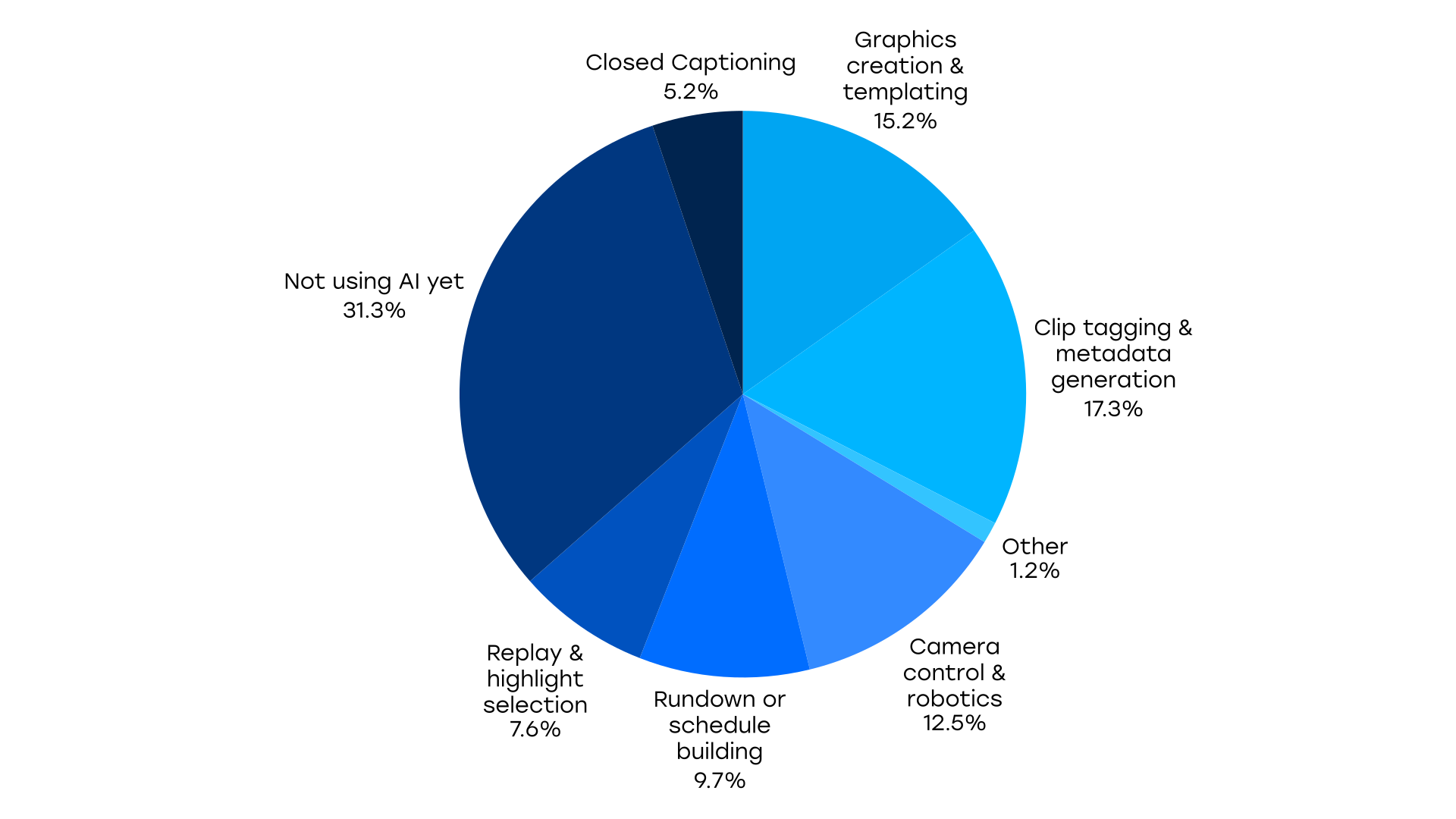
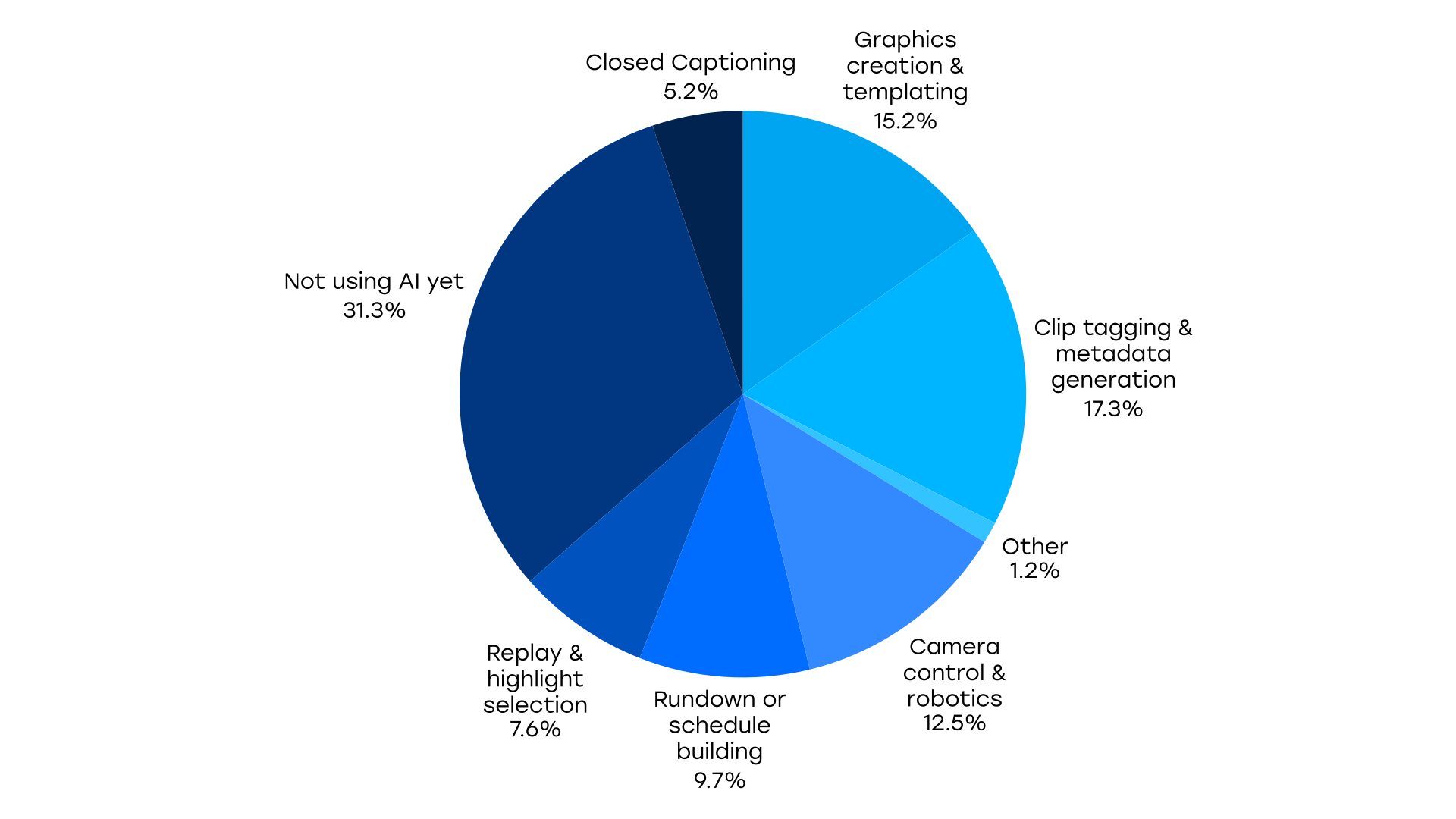
10. Which parts of your workflow are already using or trialing automation or AI?
AI is beginning to find a home in day-to-day production. Right now, metadata and clip tagging are the most common uses, with some early moves in templated graphics and captioning, but it’s important to point out that almost half of respondents aren’t using AI at all yet.
This distribution suggests two tracks for the next investment cycle: Tighten up what’s already in use for boring, repetitive work with better data hygiene and clear review and approval steps. And experiment with new AI tools in narrowly-scoped, observable workflows that are easy to roll back.
11. Which areas of live production do you expect to benefit most from AI?
The areas predicted to benefit most from AI map directly to the demands of multiplatform publishing: translation, captioning, metadata, and replay packaging. These are the workflows that determine how quickly a production can version, push, and personalize content for different audiences.
Operators will likely benefit most when AI integrates into familiar control surfaces, until eventually it is just another tool running in the background that enables them to do more, aligning with the theme of more consolidated, multifunctional roles.
AI enables a new level of automation. Operators will be able to interact with complex systems conversationally. And systems will be able to observe what’s happening in a production and take action in real time. Together, these capabilities will fundamentally change live production.
But for now, as we saw in our first questions, AI is expected to remain a support, not a replacement. Progress here is mostly about reliable engineering and good editorial and data hygiene.
The most successful early uses of AI are tightly scoped and easy to validate. When automation is applied to clearly defined tasks with measurable outcomes, it builds trust with operators instead of resistance. The key is introducing AI in ways that reduce friction and cognitive load, while keeping people firmly in the loop for judgment calls and anything that affects editorial intent.
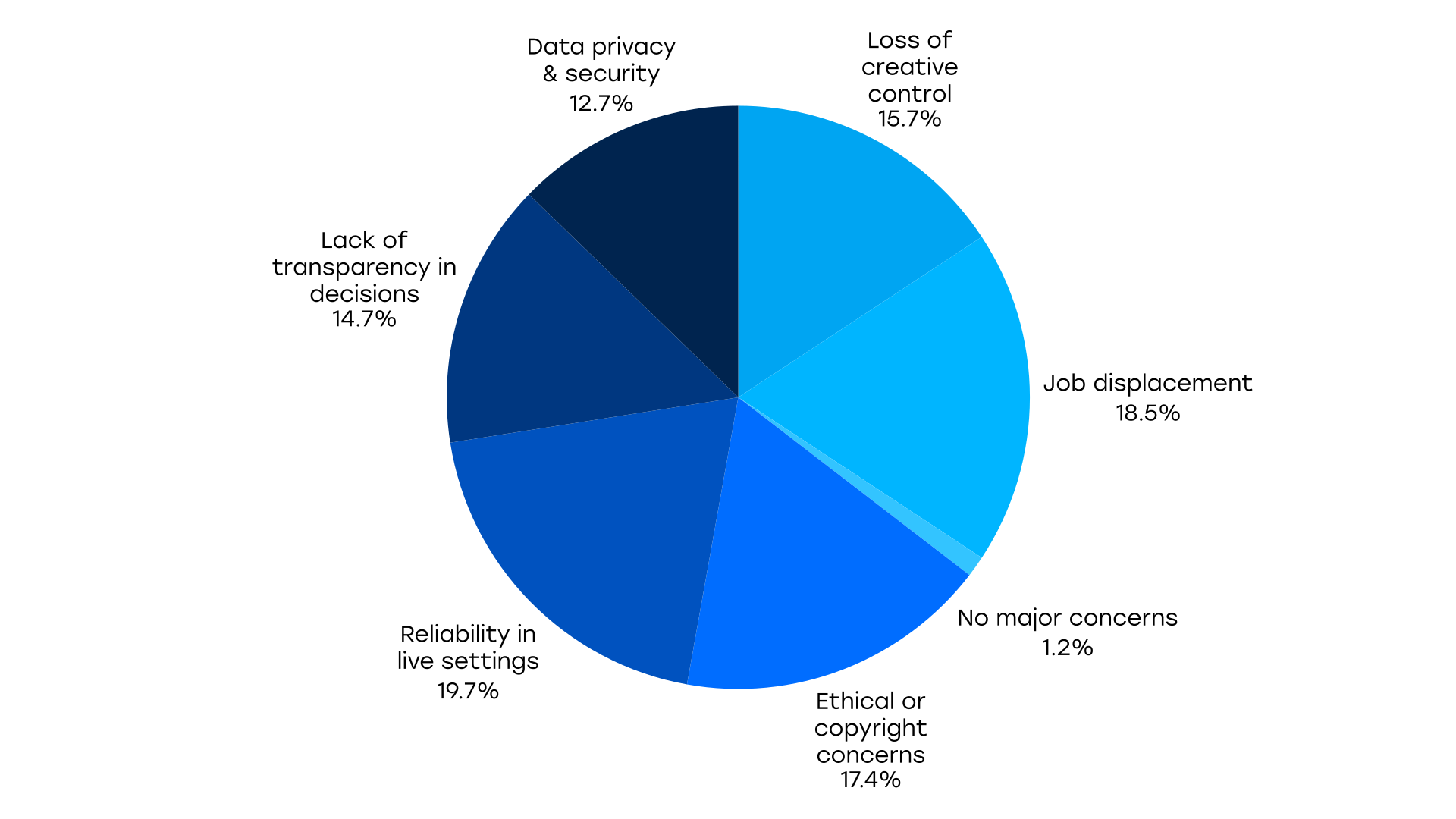
12. What concerns you most about increased AI use in broadcast production?
Concerns around AI lie in exactly where you might expect: Reliability in live settings, displacement, ethical concerns, and loss of creative control. Only a small group reported no major concerns.
Provenance is another underpinning theme. It’s already increasingly difficult tell what content is genuine, so brand perception and establishing trust will likely matter as much as the technology powering it. Although there’s currently no clear path to establishing provenance, the need for a solution is paramount.
In live production, credibility and trust are built over time but can be lost in a moment. That makes transparency, provenance, and operator awareness critical.
Prioritize AI for efficiency gains like captioning or localization workflows with smart media libraries and templated creative, and anywhere quality is measurable. But keep human controls on creative choices and anything that touches the brand. And prioritize provenance for anything that could affect viewer trust.
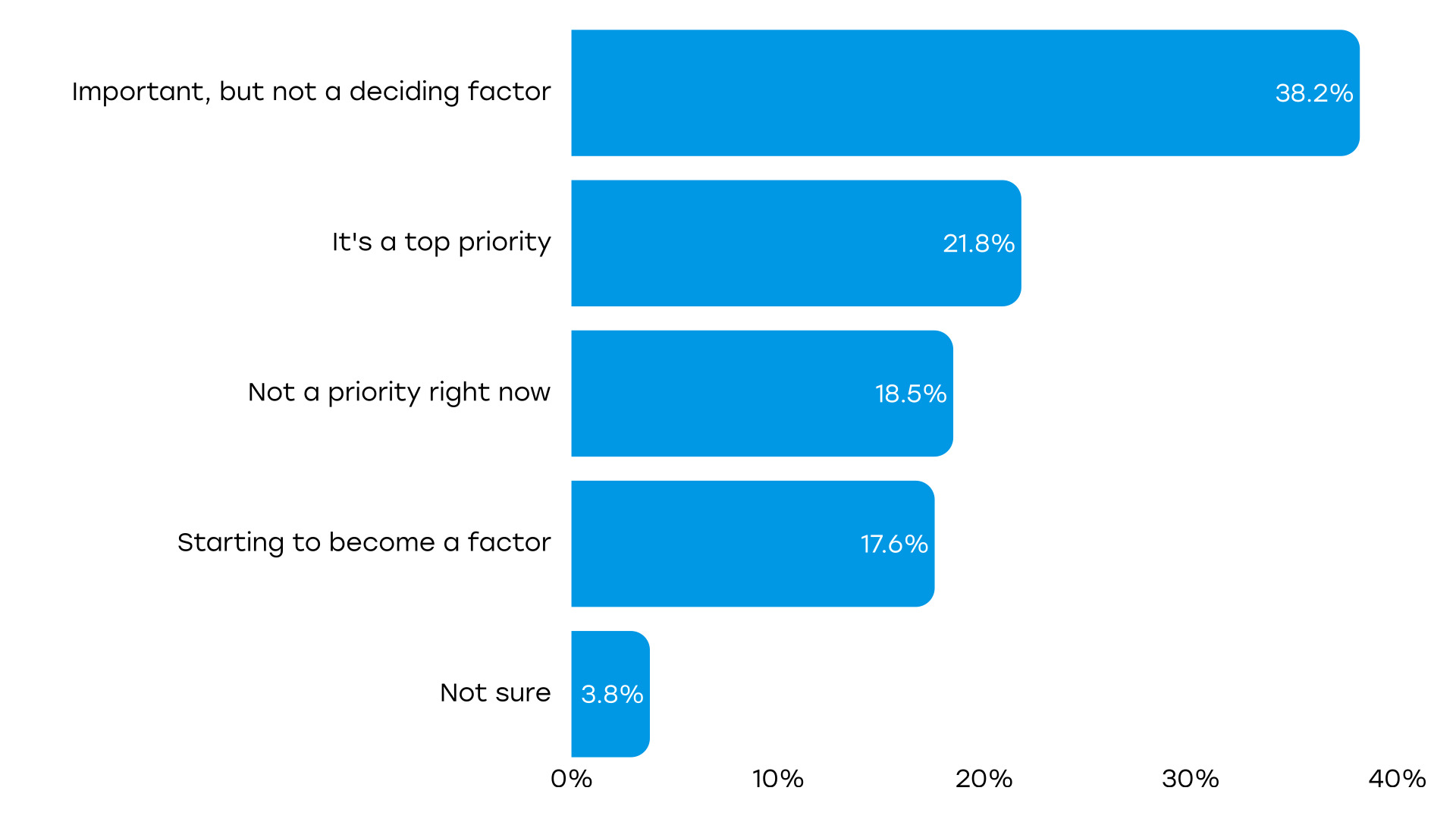
13. How important is sustainability when making technology decisions for production?
While nearly two-thirds of respondents agree that sustainability is important, the majority are not making key decisions based on sustainability alone.
That pattern is consistent: teams optimize for cost, reliability, and output first. But as we saw earlier, sustainable infrastructure is a priority investment for over 17% of respondents, reflecting outcomes-driven investment rather than blanket sustainability efforts.
An increasingly remote, distributed workforce reduces travel costs and environmental impact. Hybrid productions with shared compute or memory resources could also drive sustainability gains, which may be required to balance the huge energy costs of AI-workloads.
Tools evolve. Craft endures.
Looking across the data, there’s very little appetite for “big bang” reinvention. Production teams aren’t chasing the shiniest object. They’re looking to modernize the foundation: move only what makes sense to IP, lean into hybrid operations for elasticity, and bring in AI where it helps them process data and ideate faster, and version content without doubling the workload.
They’re just as clear that many operations like live switching, robotics, storytelling, and editorial judgement stay in human hands. The most successful operations will be the ones that treat new technology as scaffolding for creativity, rather than a replacement for it. Over time, those capabilities become part of the fabric: operators still direct shots and stories, but the system around them takes care of the heavy lifting.
If there’s an overarching takeaway from these responses, it’s that the future of live isn’t about one big bet. It’s about many small, smart ones. Build for agility and repeatability by investing in tools and workflows that let you “package once, version many,” and the flexibility to integrate or change technology quickly as your needs change.
Choose technology that plays nicely together and works with multiple formats and protocols, so you have the flexibility to switch from on-prem to hybrid as your needs change. Optionality (and committed technology partners) will be crucial to thriving in a decade of unprecedented change. After all, prediction is difficult, especially about the future.
What next?
At Ross Video, innovation starts with how productions actually run.
Live means no do-overs, no excuses, and no tolerance for systems that don’t behave predictably. That’s why all our work in research and development is focused on progress that fits into real productions.
If you’re thinking about how to evolve your production stack, we’ve got the tools to help you get there.
To learn more about the new technology we’re building and how it’s already helping customers today, get in touch with the Ross team.


