The hidden workflow crisis in broadcast news
Senior broadcast news leaders share the pressures shaping the industry today and what it will take to move forward.

Why 76% of newsrooms are struggling to get the story to air
This report was created to better understand the operational pressures shaping broadcast newsrooms today. Based on conversational survey responses from 100 senior broadcast news leaders in 2026, it examines where production bottlenecks are emerging, why recent technology investments have not always delivered the expected relief, and how manual workflows are affecting story quality, team capacity, and audience engagement.
The results of our survey highlight just how many broadcast newsrooms are working under increasing pressure. Production bottlenecks are increasingly visible in what makes it to air. Technology investments have not yet delivered the relief leaders expected, meaning manual processes are still taking up time that could go to journalism.
Each of these findings connects to the next, and together they point to where production investment can make the most difference.
Key findings at a glance
- 76% say newsroom slowdowns are directly affecting what makes it to air
- 71% say AI-powered tools have not yet delivered the productivity gains they expected
- 9 in 10 newsroom leaders see at least a partial production-side opportunity to close the audience engagement gap
Today’s newsroom pressure is mostly operational
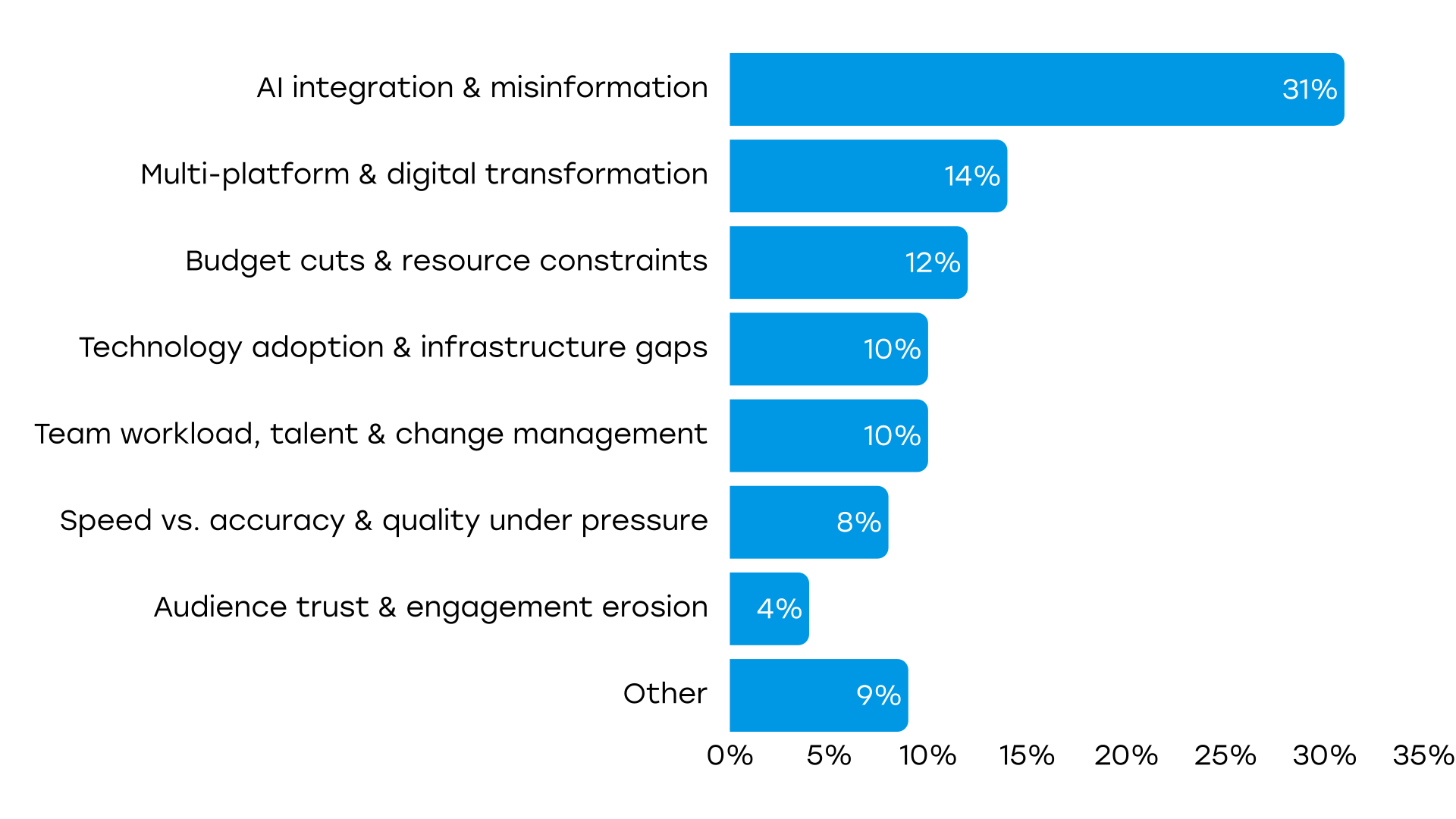
When asked to name their single biggest challenge for the year ahead, one theme dominates: managing rapid technological change while maintaining editorial quality.
AI integration and misinformation top the list, with budget constraints, platform fragmentation, and team workload following closely behind.
1. Three in four newsrooms say production bottlenecks are now reaching the air
Newsroom bottlenecks have moved beyond internal inconvenience. The impact is no longer limited to back-of-house operations. The combined pressure of turnaround time, story volume, and multi-platform delivery is now showing up in output quality, team capacity, and what makes it to air.
Workflow issues become editorial problems when teams have slower access to content and context. When a single story needs to be published on several different platforms in several different formats, the output needs to be clear from the outset, otherwise work just gets repeated.
In a fragmented newsroom environment, it is more difficult to write a story, find the relevant content, edit, and publish quickly. This directly impacts how many stories can be told and the quality of those stories on each platform.
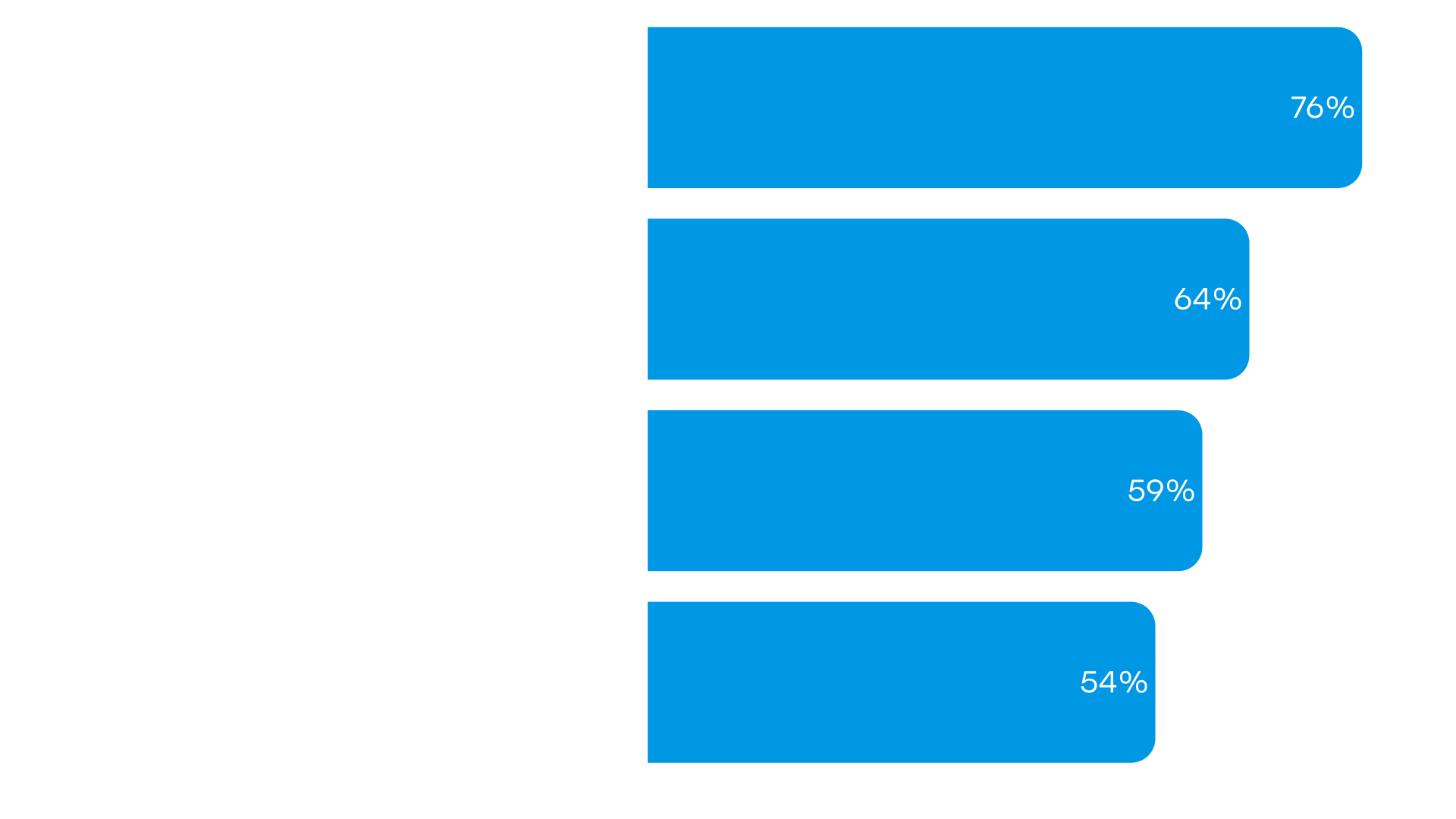
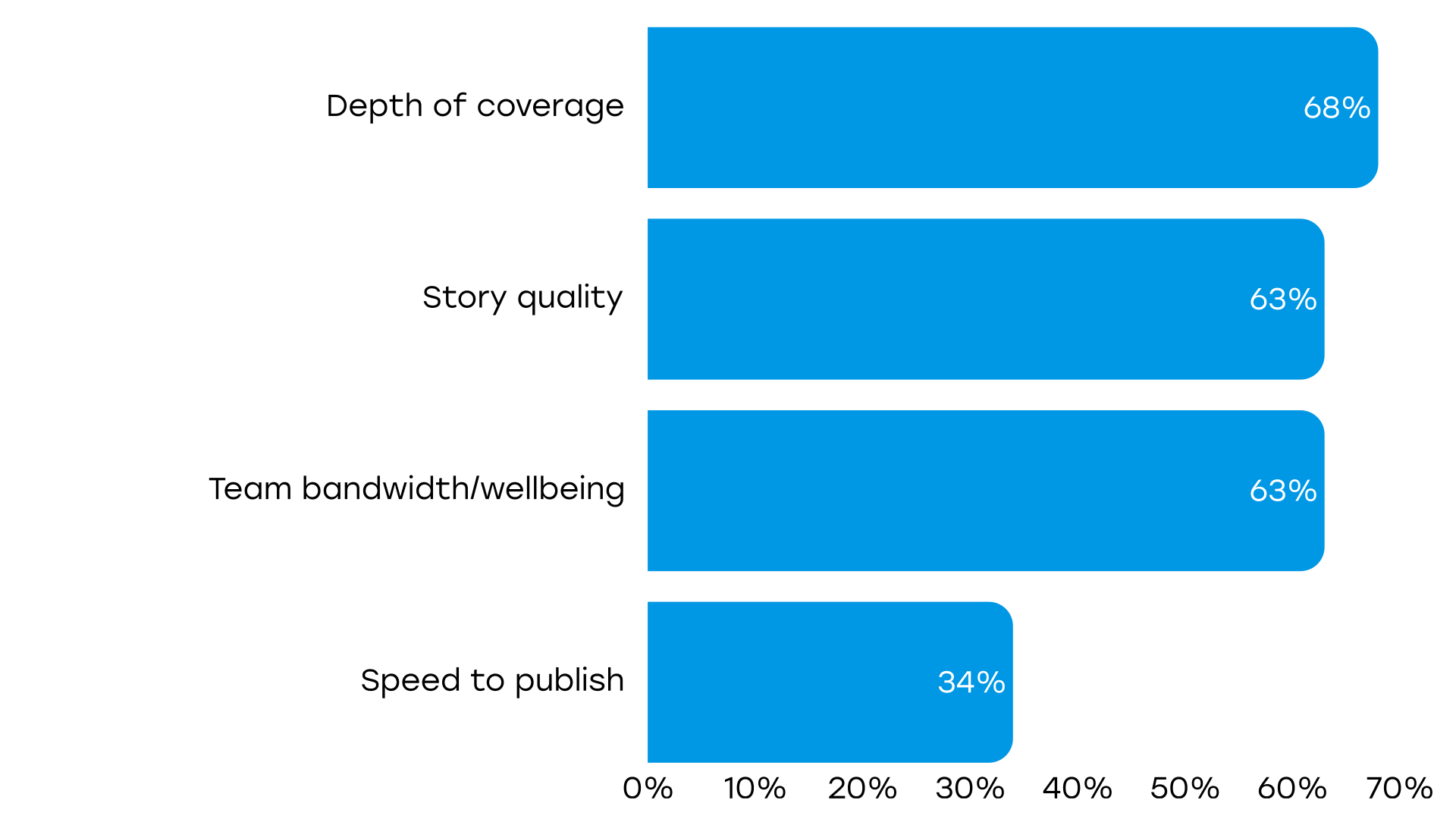
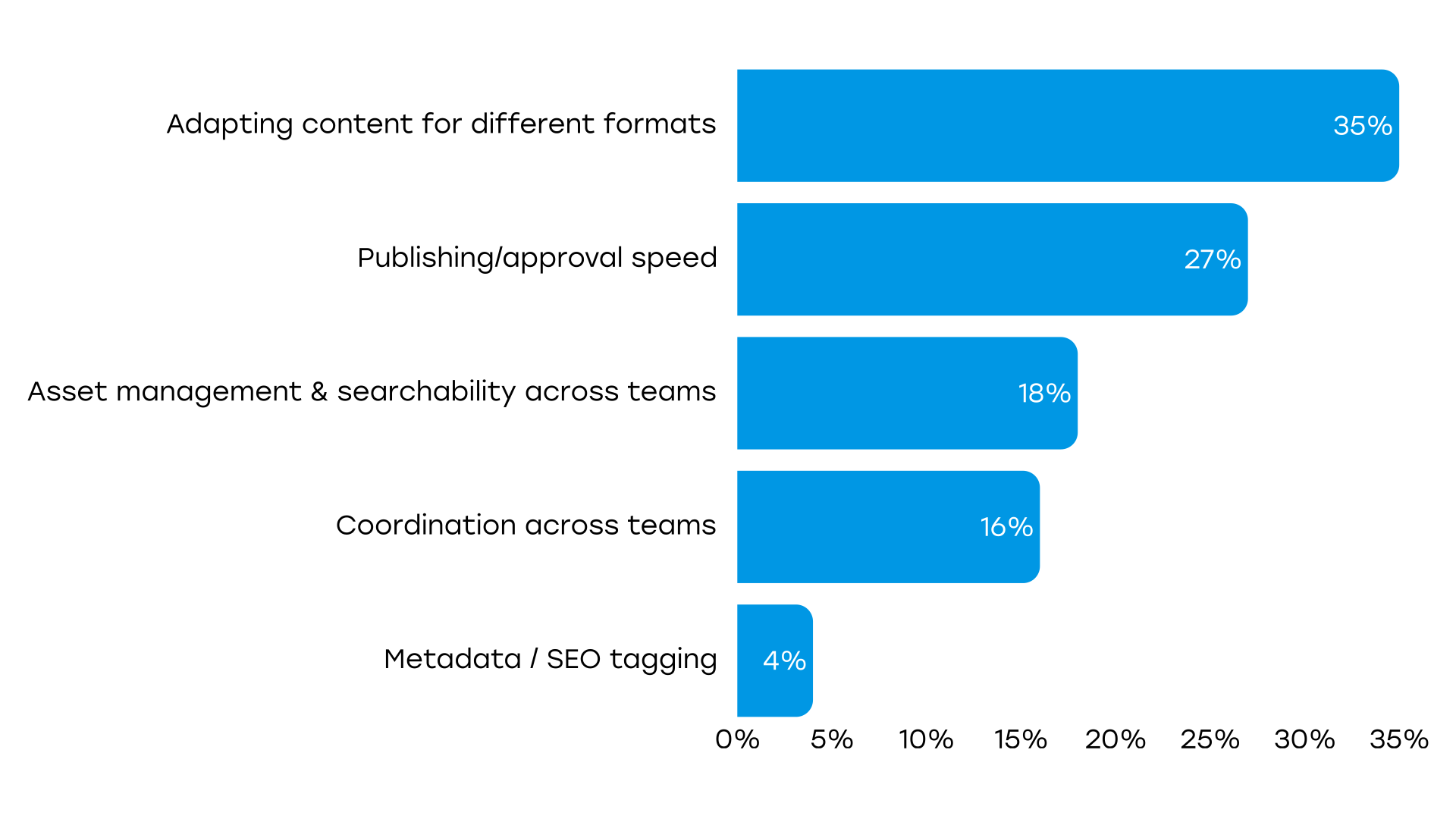
Production pressure is affecting editorial output as well as operational pace. 76% cite turnaround time as a top pressure, and the follow-on effects are clear: 67% say story quality is being compromised, 65% report team strain, and 53% are missing deadlines. 35% of respondents cite content reformatting as the single biggest breakdown point in the chain from production to audience.
How do bottlenecks affect your newsroom? (Multi-select)
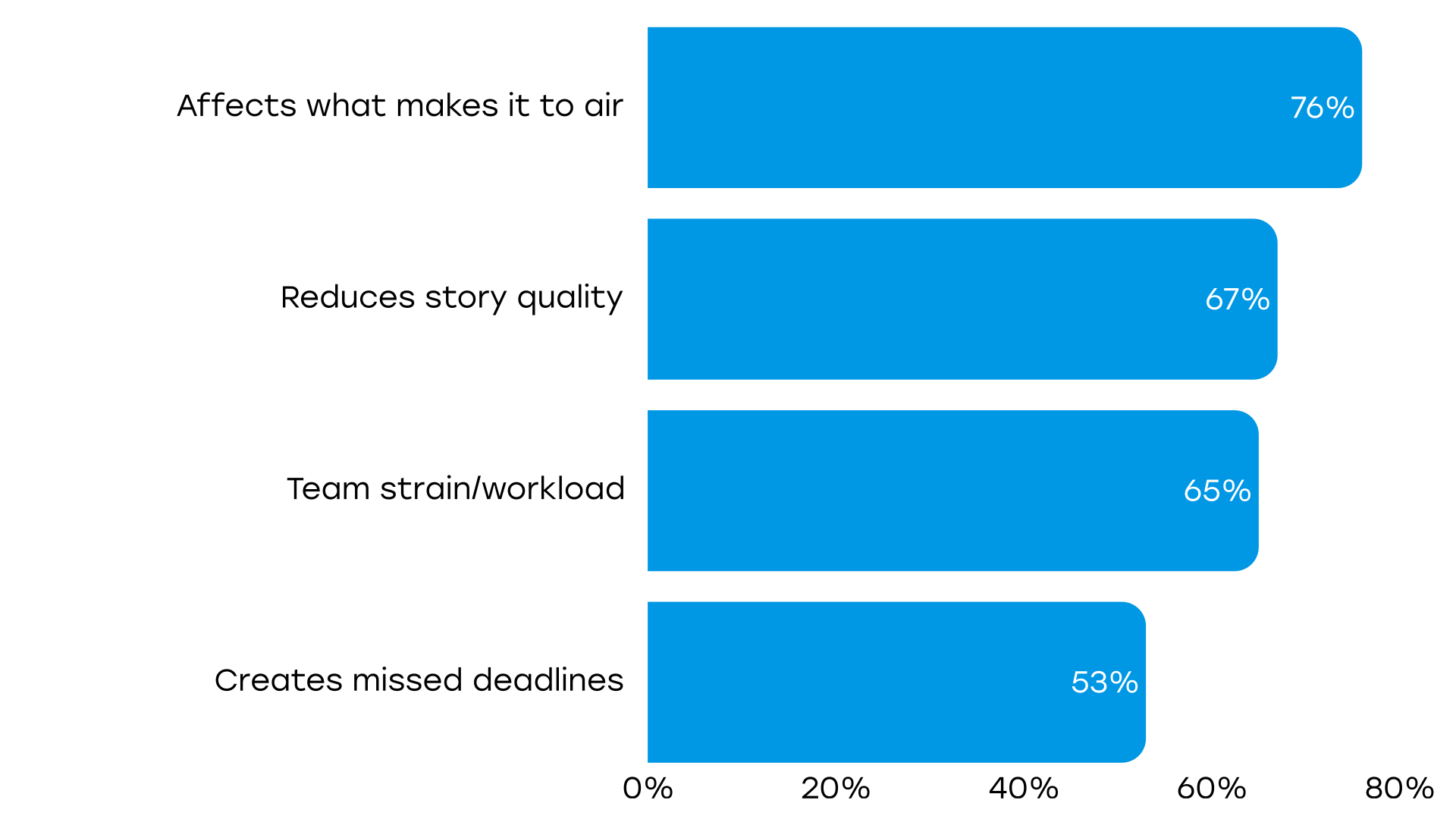
Where does production pressure pile up most? (Multi-select)
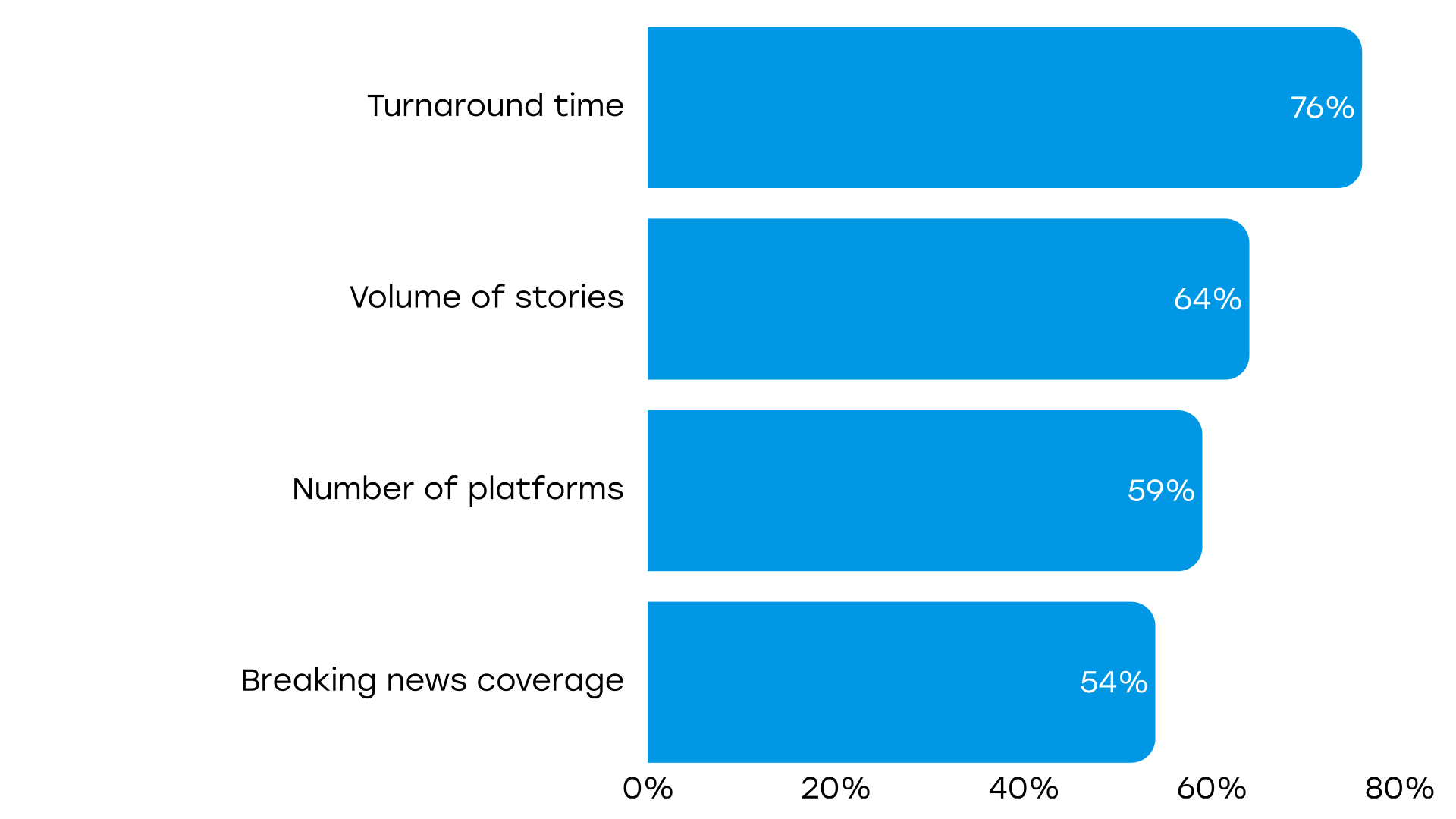
What are you sacrificing to keep up with speed? (Multi-select)
When getting content out across channels where does the workflow break down most?
2. Technology investments have not yet eased the pressure
The industry has invested heavily in technology to ease production pressure, with mixed results so far. AI tools, cloud workflows, and automation platforms have each delivered some value, but the gap between vendor promises and day-to-day reality remains wider than newsroom leaders expected.
The survey points less to the technology itself as the problem, and more to how it is being implemented and supported in real production environments.

AI in broadcast: Less magic, more plumbing
AI in broadcast is easy to oversell. To move past the hype, we asked industry leaders what AI is actually changing in media workflows right now.
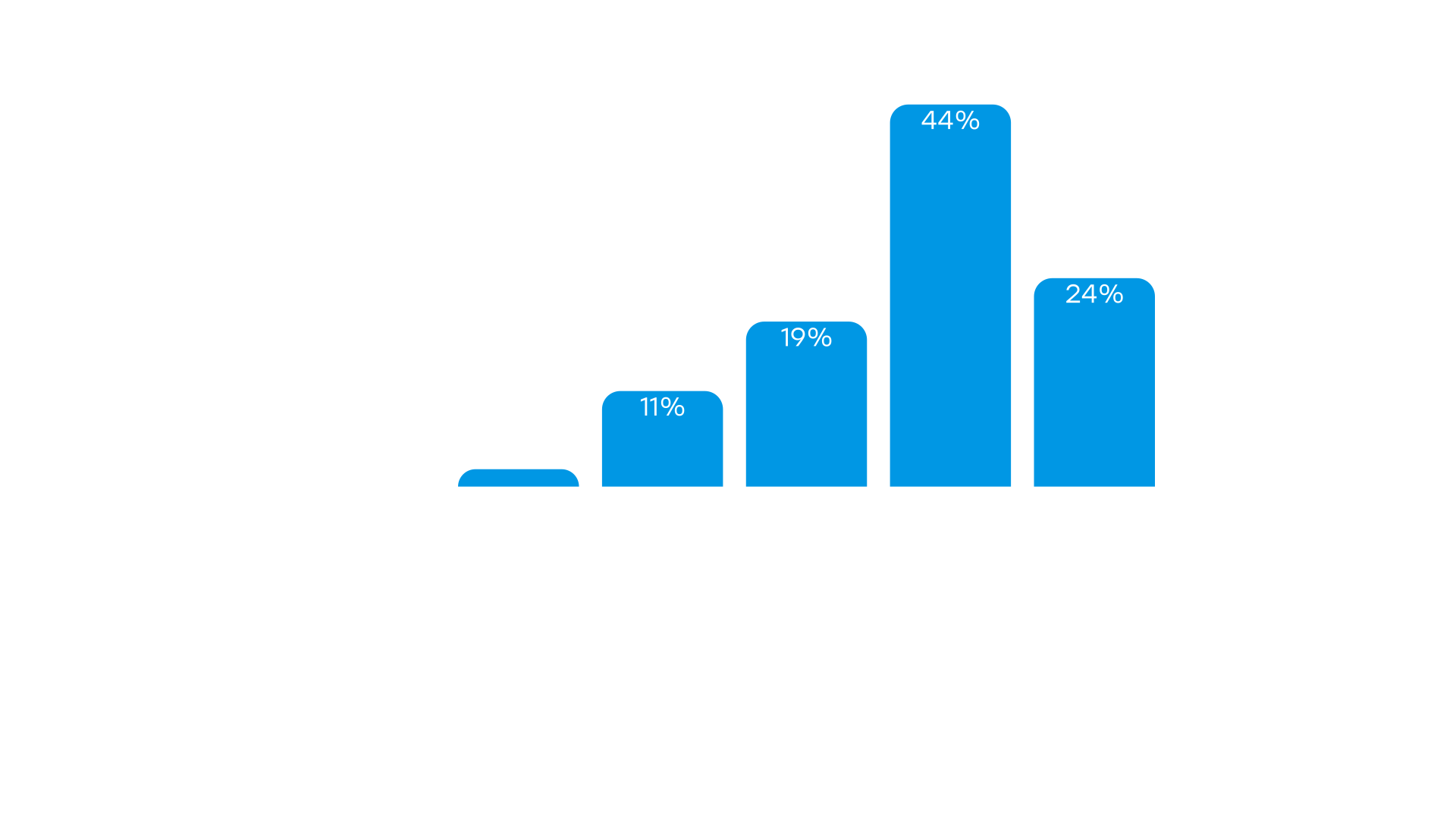
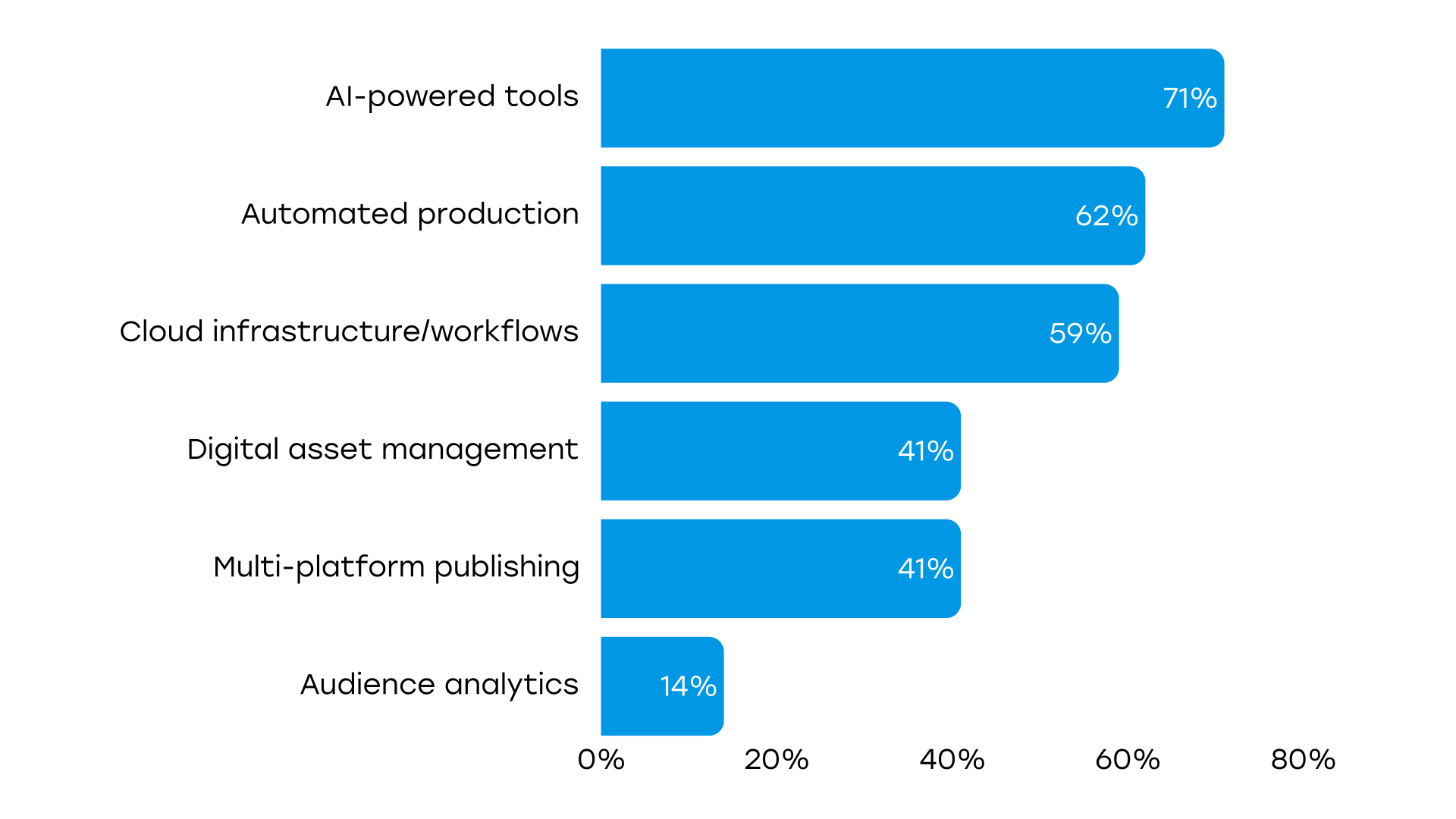
What technology category has most underdelivered on its promise? (Multi-select)
What technology capabilities does your newsroom most urgently need? (Multi-select)
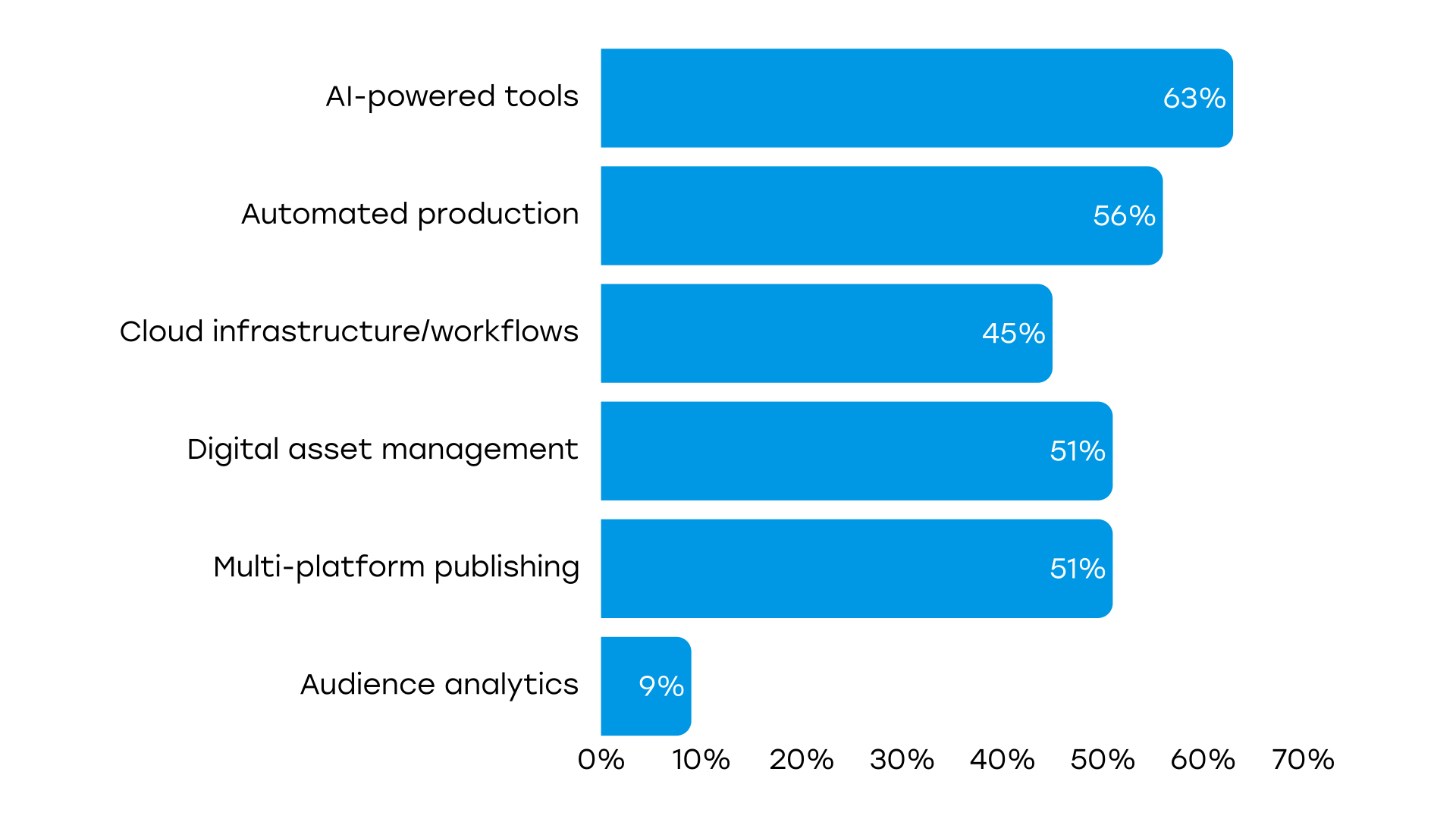
71% say AI-powered tools have not yet met their expectations, the widest gap of any category. Automated production (62%) and cloud infrastructure (59%) follow.
Despite that, those same leaders still see strong potential ahead: 63% cite AI as a top capability need and 56% point to production automation as a priority investment area.
The pattern across responses is consistent: newsrooms are not stepping back from these technologies. They are looking for ways to make them work as integrated parts of a wider production workflow, with the implementation support to match. But that’s where they’re encountering the biggest challenges.
3. Manual work takes up hours that could go on journalism
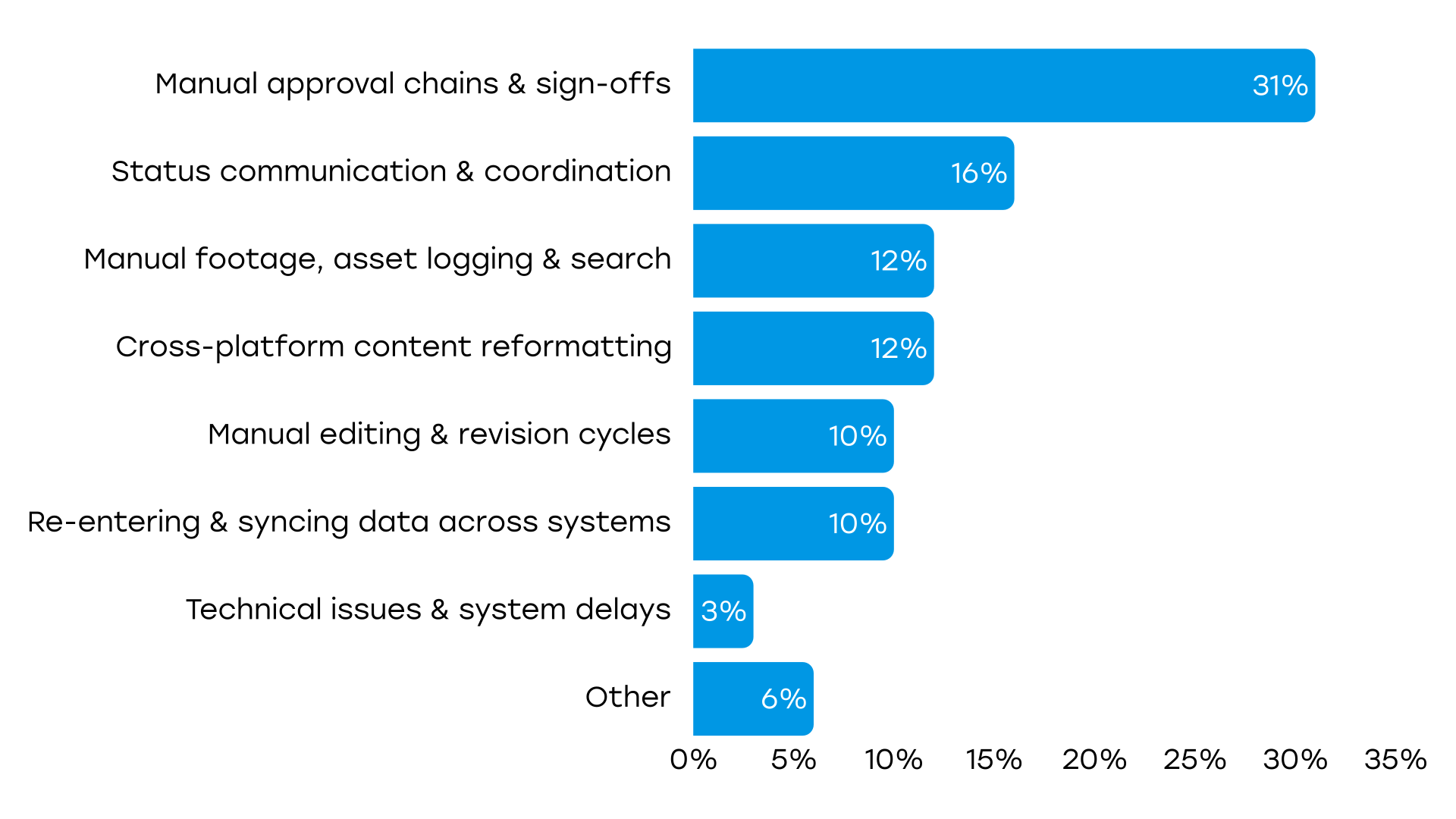
With technology yet to fully deliver on its promise, the manual workload still sits with people. Approval chains, cross-platform reformatting, footage logging, and script version management add up to a meaningful daily draw on the capacity of some of the most experienced journalists in the industry.
Even among leaders who did flag staffing as a stress factor, nearly 3 in 4 traced the underlying cause to workflow structure rather than headcount. That indicates there is significant opportunity in addressing how production work is distributed and supported by technology, not necessarily in adding more people.
What is the single biggest time-waster in your daily production workflow?
If you could snap your fingers and automate one manual process in your newsroom tomorrow, what would it be?
What are the biggest day-to-day pressures your team faces?
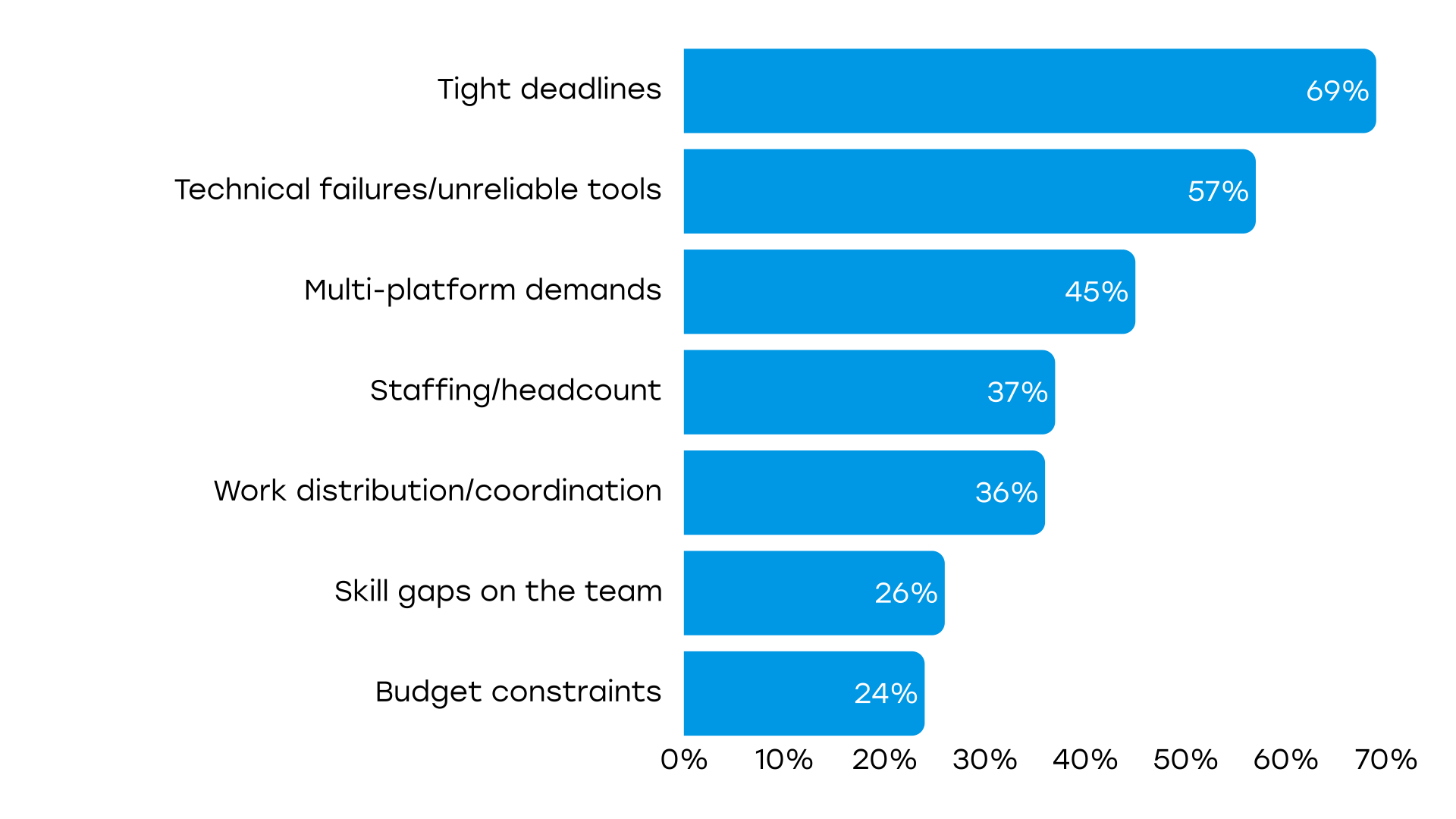
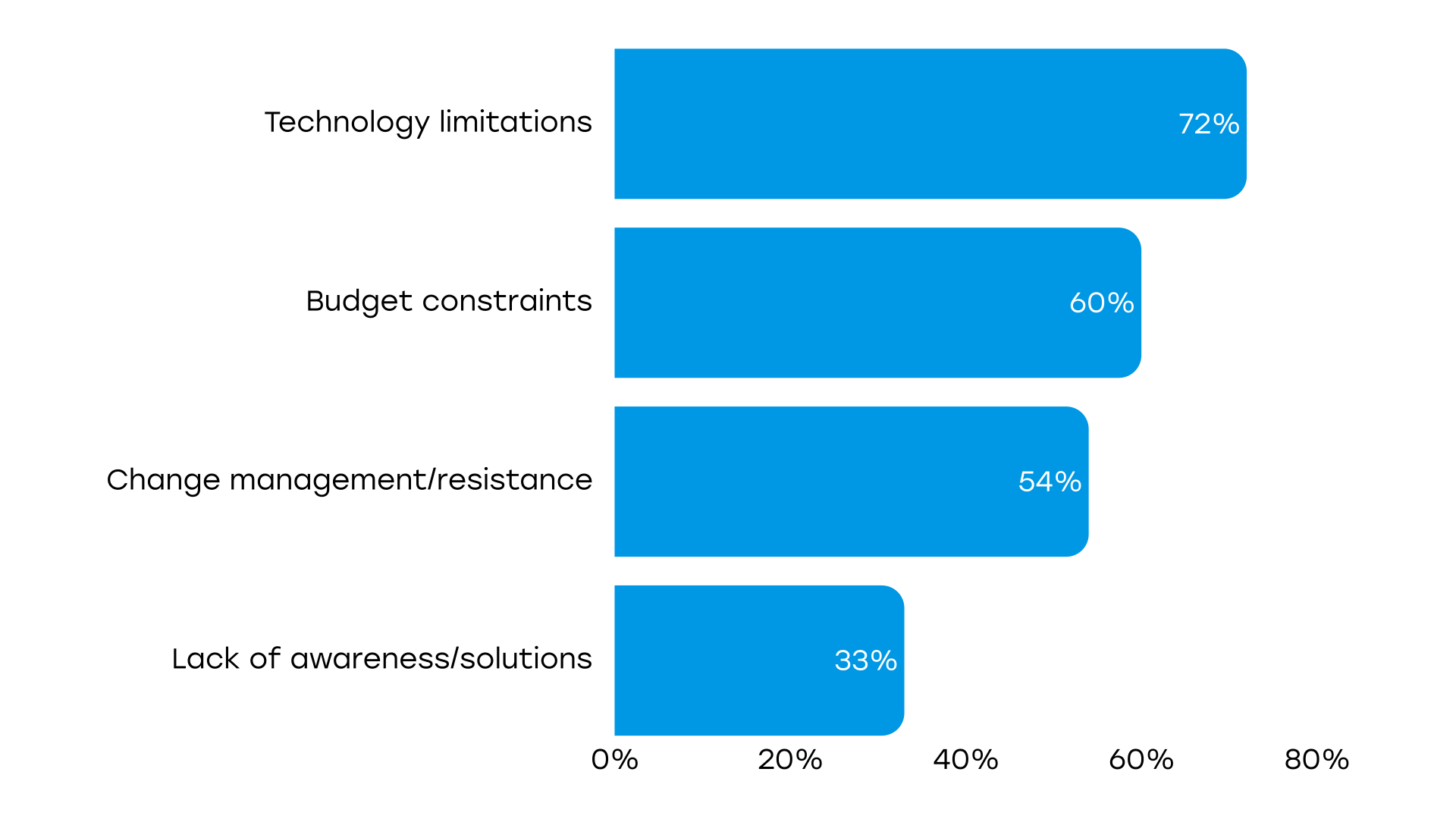
What are the biggest barriers to adopting new technology solutions?
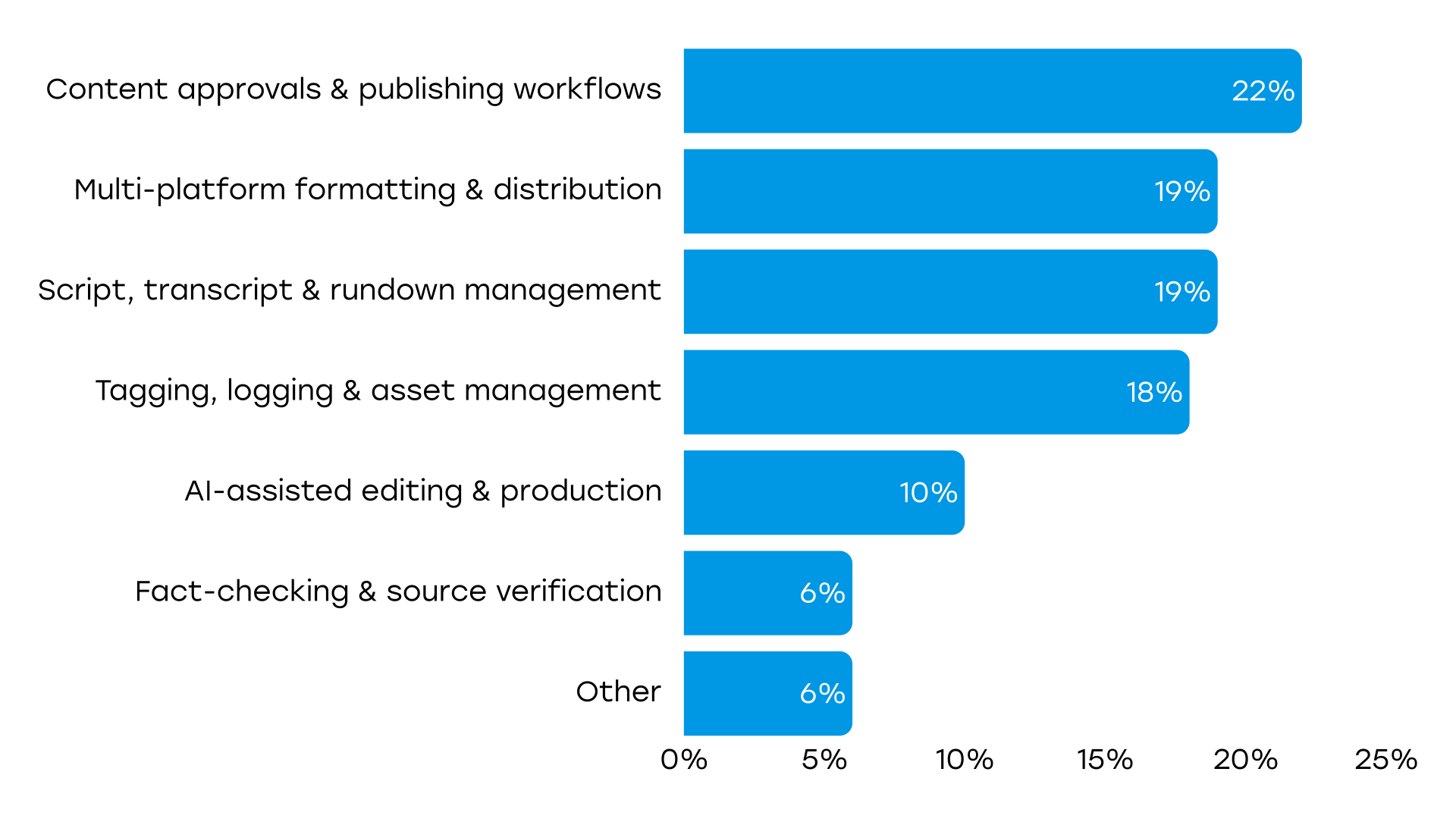
The three processes that newsroom leaders most want automated are content approvals (22%), multi-platform distribution (19%), and footage tagging (18%). None of these require journalistic judgement, yet all of them currently draw on journalist time.
Respondents point to technology limitations (72%) and budget (60%) as the main barriers to automation. The opportunity is less about adding more tools and more about connecting the ones already in place in an automated workflow that handles these tasks almost end-to-end.
The most common technology issues newsrooms are running into are too many discrete tools, and inefficient handoffs between systems. Many teams operate across multiple disconnected tools, each with its own interface and workflow logic, creating delays and errors.
Manual steps, such as moving content between ingest, edit, and publish, add friction and slow turnaround. Additionally, legacy workflows often aren’t designed for fast, multi-platform publishing, making it difficult to scale output efficiently.
These issues combine to reduce speed, limit collaboration, and increase operational overhead, forcing teams to spend more time managing systems than producing content.
Keep Reading: How Ross Video’s Indigo platform unifies the digital-first newsroom
4. Audience engagement is slipping and production workflow improvements can help
The four findings in this report are connected. Bottlenecks slow production, and because technology has not yet eliminated them, manual work consumes more time and resources than it should.
With teams focused on day-to-day operations, audiences are seeing slower content delivery, less personalised stories, and slower platform-specific publishing.
One encouraging insight in our data is that it appears that much of what is driving audience drop-off sits within areas newsrooms can actually influence.
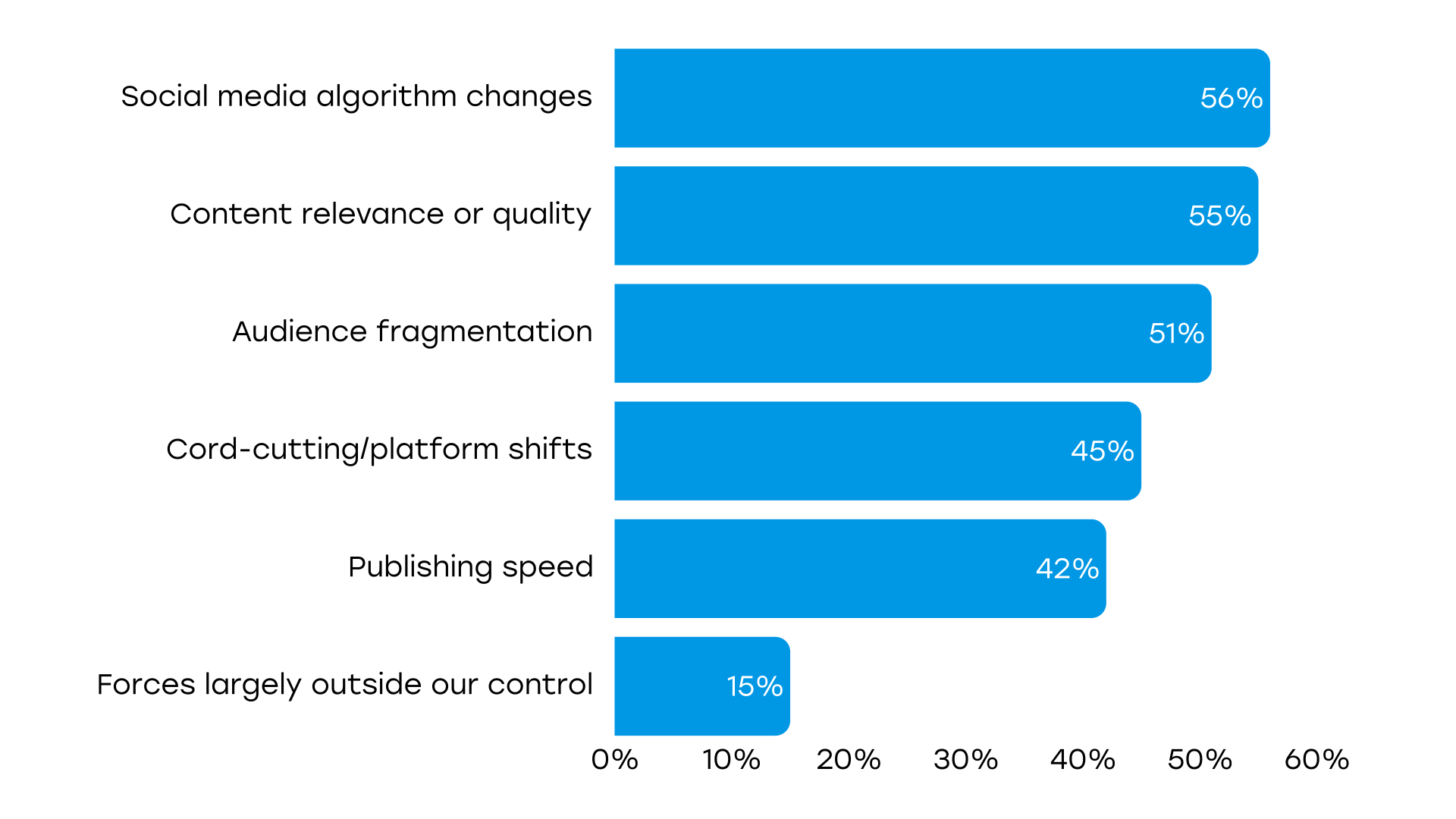
Where are you losing audience engagement right now?
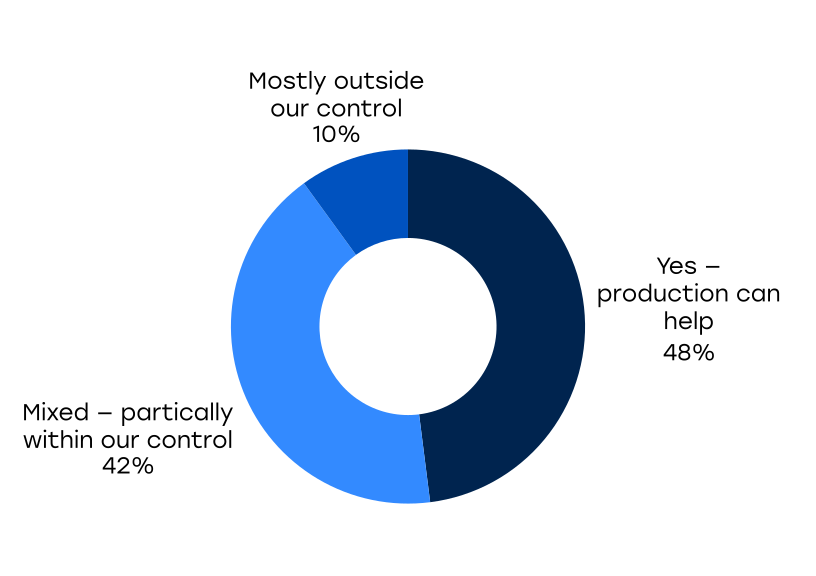
Can production help close the engagement gap or does it feel out of your control?
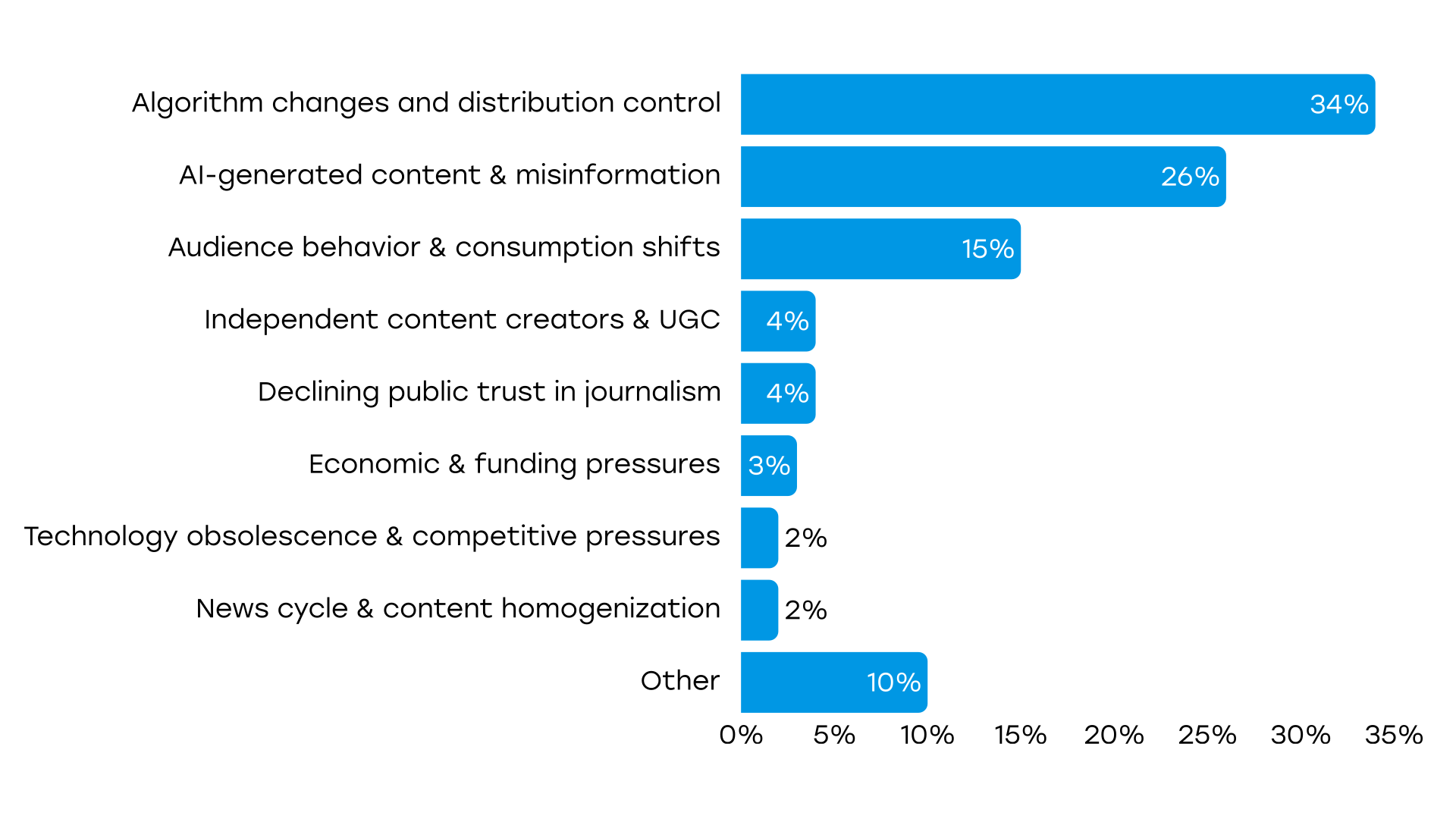
What industry-level shift worries you most?
If you could prioritize investment in one area where would it be?
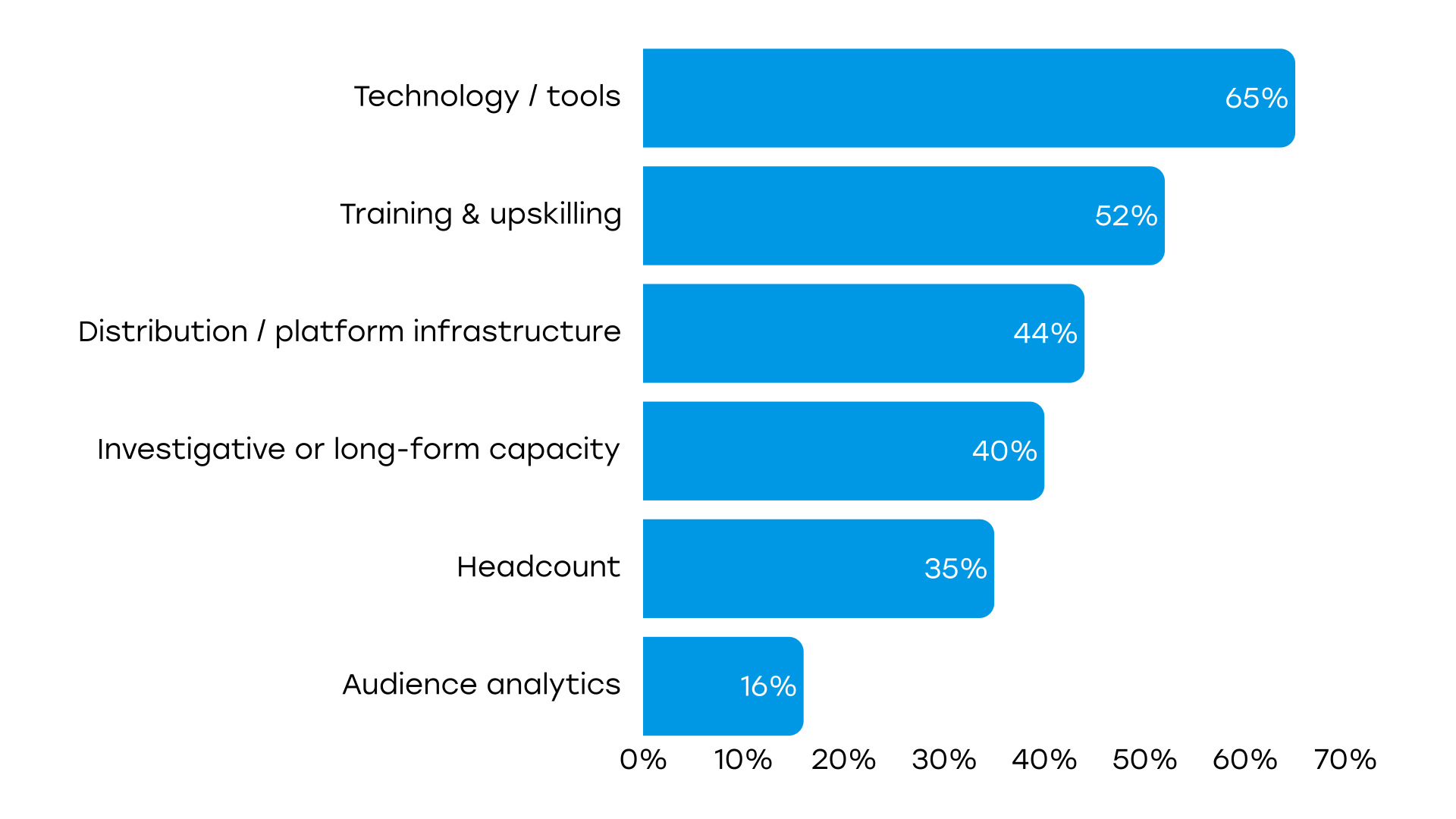
Social algorithm changes (56%), content relevance and quality (55%), and publishing speed (42%) top the list of where engagement is being lost. Two of those three sit within production’s sphere of influence.
Content relevance benefits when teams have more time for editorial work and less time on admin. Publishing speed benefits when workflows move smoothly through approval. 48% of leaders believe production improvements could directly help with audience drop-off, and a further 42% say they could help partially. That suggests the industry sees a path forward; the question is one of execution.
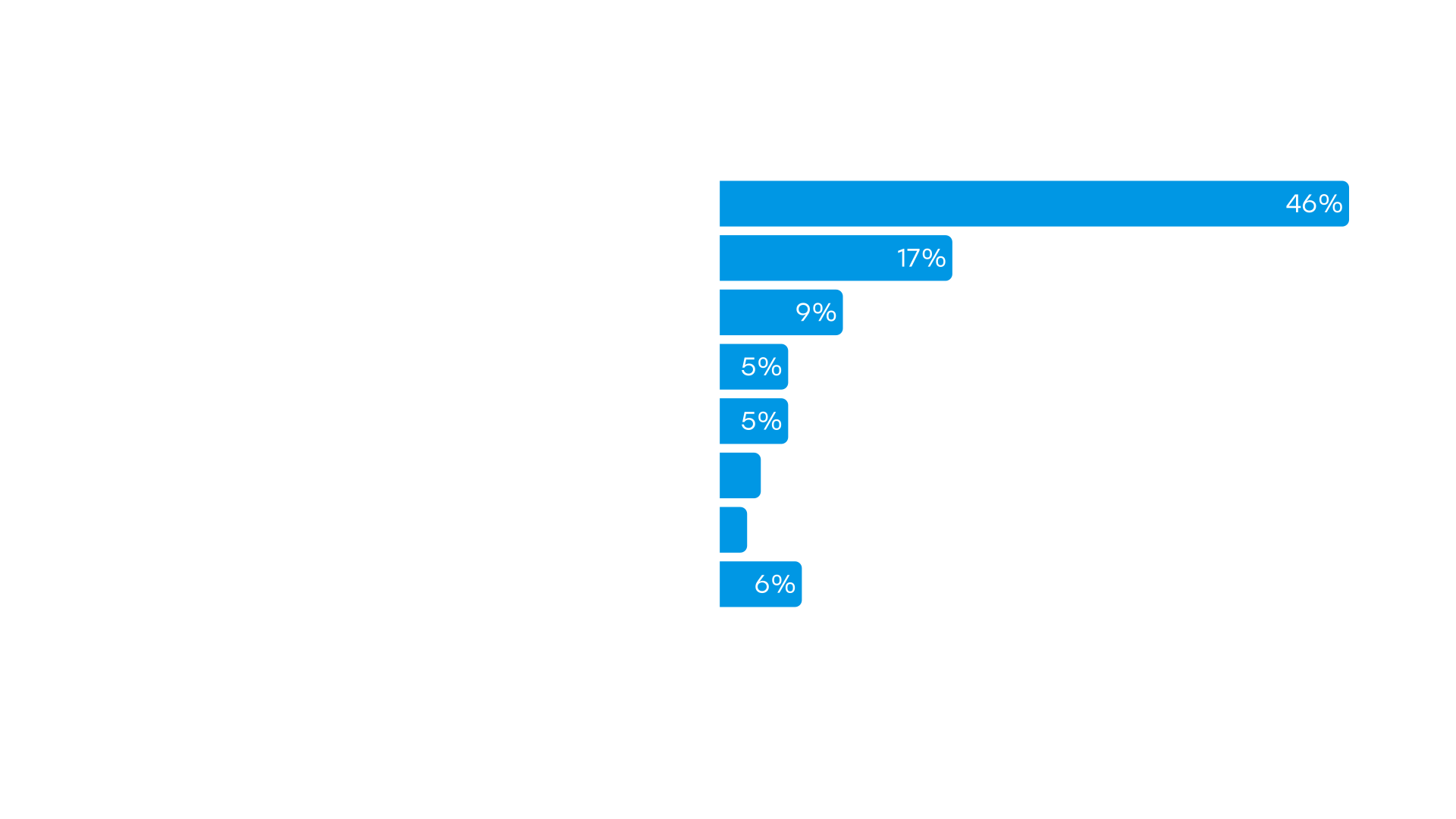
What would transform your news broadcast operations?
When asked what single change would most transform their news operation, 46% of leaders converged on the same answer: a unified end-to-end workflow. The specifics varied, but the intent was consistent.
The biggest shift over the coming years will be the move from system-centric production to workflow-centric platforms. Instead of stitching together tools, organizations will operate on unified environments that connect planning, production, and distribution.
This shift enables automation and AI to be embedded naturally into workflows, driving real efficiency gains rather than adding complexity. That will allow newsrooms to focus on producing more content with the same or fewer resources, while maintaining the quality and speed that keeps audiences engaged with broadcast news.
The winners will be organizations that best simplify and integrate their workflows, so that their technology — old and new — is directly aligned with how they create and deliver stories.
Solving the news production workflow bottleneck
It’s hard to set up a single, connected workflow like the one 46% of leaders in our research described because technology alone isn’t enough. To succeed, you need the right tools and ongoing support during and after deployment.
If your technology partners and vendors don’t take time to understand what you want to achieve, your investment will likely fall short of your expectations.
Ross Video offers integrated production tools that cut down on manual steps, link ingest to publishing in a single workflow, automate time-consuming tasks, and help you publish quickly across platforms. But our real value is in combining this technology with expert guidance and support, so your team can use it confidently and get the results they expect, without just moving the workload to another part of the process.
If your technology isn’t meeting your needs or you’re facing a production problem, we don’t just sell you technology. We work with you to find the best way to achieve the outcome you need, select the right solutions to get there, and stay with you beyond deployment to ensure it delivers on the first day it goes live — and every day after that.

Built for breaking news
Keep pace with the 24/7 news cycle using automated, end-to-end production tools that help broadcasters create, package, and deliver engaging content across every screen and platform.
Methodology
- 100 Total respondents
- 100% Passed all four screener criteria: role, experience, reach and decision-making authority
- 10+ years in journalism or broadcast media, confirmed for all respondents by screener