When communication really matters, experience matters
When communication matters most, teams need systems designed for reliability, clarity, and control. A failure in a key moment can weaken trust, damage your brand, and disrupt alignment. The real opportunity is to move beyond ad-hoc setups and create repeatable, easy to use environments built for high-stakes communication.

How NYSE Scaled Live Production Without the Complexity

Lights, Camera, Impact: Ross & LMG Reimagine Live Events

Driving Innovation & Education in ProAV










Ready for every environment



Unmatched technology portfolio for AV

Experiential Technologies
Vertex provides the tools to unify video, audio, lighting, and control into one solution to create, manage, and automate captivating experiences.
See all
Production Switchers
Ultrix Carbonite unifies power, routing, processing, and switching into a compact, scalable platform.
See all
Routing Systems
Boost flexibility and simplify your infrastructure with integrated routing, processing, and switching.
See all
Robotics
Our 4K UHD PTZ cameras deliver quiet, precise image capture for professional broadcast, corporate AV, and live environments.
See all
Graphics
XPression is the ultimate visual storytelling tool that builds stunning visuals and transform your data into compelling stories.
See all
Meeting Production & Control
Quorum simplifies meeting production, delivering professional live AV broadcasts of any event and training users quickly.
See all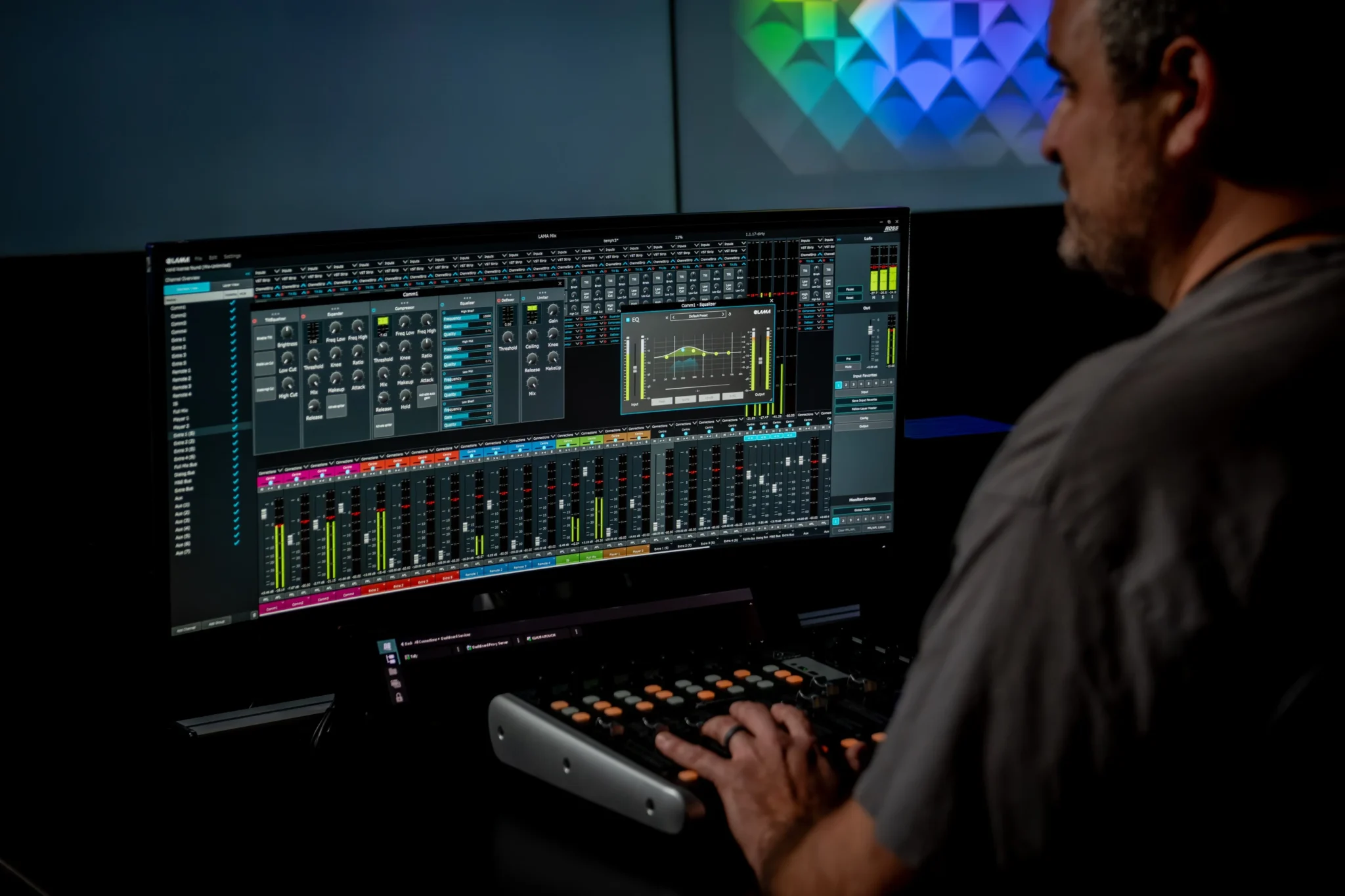
Audio Systems
Lama simplifies live audio production with software-defined mixing, intelligent automation, and flexible connectivity for broadcast, corporate AV, and streaming workflows.
See all